
What Insurance Does a Yacht Need for Its Crew?
Yacht crew insurance is four separate covers: the owner's crew liability, a crew medical plan, personal accident, and MLC abandonment security. Each pays for a different event, and none of them pays for an ordinary flight home when a contract simply ends.
Which policy pays when crew are ill, injured or have to go home, with the MLC 2006 rule behind each one.

4 layers
Crew liability, medical, personal accident, abandonment
16 weeks
Shortest cap any MLC flag may set
4 months
Wages abandonment security must cover
18 Jan 2017
MLC financial security in force
Insuring a yacht with paid crew?
Tell us the yacht, the flag and who the crew are. We introduce the enquiry, and the firm that arranges your cover sends written terms.
Definition
Yacht crew insurance is the set of policies and financial-security certificates that pay when a paid crew member on a yacht is ill, injured, dies or has to be sent home. The legal duty sits on the owner as the employer. Insurance is what funds it.
At a glance
- Four layers answer four different events: crew liability, a crew medical plan, personal accident and abandonment security. The matrix below shows who buys each one and where it stops.
- On the yacht wording we read, the base liability section excludes anyone you employ. Hired crew come back only through a crew-liability extension shown on the schedule, and it sits inside the same liability limit.
- Under the Maritime Labour Convention, 2006 (MLC 2006), no flag may cap the owner's medical costs or off-ship wages at less than 16 weeks.
- MLC abandonment security covers up to four months of outstanding wages and has been in force since 18 January 2017. It protects the crew, not the owner.
- An ordinary flight home at the end of a contract is the owner's cost, not an insurance claim.
- Whether MLC applies turns on commercial use and the flag: the UK, Malta and the Marshall Islands treat private yachts as outside it.
This page is general information, not legal or financial advice. Check the position for your own yacht with your flag administration.
Crew cover in numbers
16 weeks
The shortest cap any MLC flag may put on the owner's medical, board and off-ship wage liability.
MLC 2006, Standard A4.2.1(2) and (4), ILOUnder 12 months
The longest service period a flag may set before crew are entitled to go home.
MLC 2006, Standard A2.5.1(2)(b), ILO18 January 2017
The date abandonment, death and long-term disability security entered into force.
ILO news release30 days
The notice a provider must give the flag State before death and disability security ceases.
MLC 2006, Standard A4.2.1(12), ILOWhich policy pays when a yacht crew member is ill, injured or has to go home?
Four layers answer four different events, and the owner, not an insurer, carries the legal duty behind most of them. Crew liability pays what the owner is legally or contractually liable for. A crew medical plan pays for treatment. Personal accident pays a fixed benefit whoever is at fault. Abandonment security pays only when the owner cannot.
On a yacht covered by MLC 2006, the owner must pay for a crew member's sickness and injury from the day they start work until they are repatriated (Standard A4.2.1(1)). Insurance pays for that duty. It does not take it over.
| Layer | Who buys it | What triggers it | The rule behind it | On duty only? | Where it stops |
|---|---|---|---|---|---|
| Crew liability (a P&I club entry, or a crew-liability extension on the yacht policy) | The owner | A claim the owner is legally or contractually liable for: illness, injury, death, illness-driven repatriation | MLC Standard A4.2.1; the employment agreement | Mostly, as the wording defines it | Ordinary end-of-contract travel; terms the insurer has not approved; anything another policy pays |
| Crew medical plan | The owner, or the crew member | Treatment, hospital and evacuation costs | The plan's own terms; the employment agreement | Often 24 hours, on or off the yacht | Conditions not disclosed at the start; the plan's own exclusions |
| Personal accident | The owner, or the crew member | Accidental death or disablement, at a fixed sum | The policy's benefit table | Often 24 hours; check the policy | Illness; anything outside the benefit table |
| MLC abandonment security | The owner, through a financial-security provider | The owner abandons the crew or cannot pay | MLC Standard A2.5.2 | Not a duty test | Ordinary costs the owner can pay; the provider can recover what it paid from the owner |
| The crew member's own policy | The crew member | Anything the yacht's layers leave out | The policy's own terms | Depends on the policy | Travel policies often exclude paid or offshore crewing; check the wording |
Three gaps sit between the layers. A crew member hurt ashore while off duty may fall outside crew liability. An illness not disclosed at hiring can be declined by both the medical plan and the liability cover. And the ordinary flight home when a contract ends is not insured at all. For the full list of what a P&I entry pays beyond crew, see what P&I covers.
Does a standard yacht policy cover your crew?
Not on its base liability section. The yacht wording we read excludes injury to anyone you employ, crew or not, and any benefit a statute requires. Hired crew come back only through a crew-liability extension that the schedule has to show, and the crew limit is not extra money: it sits inside the same combined single limit as every other liability claim.
For a US owner, that shared limit is the part to watch. A crew claim erodes the limit that also has to answer a collision or a guest injury, and in the wording the extension's own deductible applies to each crew claim. You can read how the crew and passenger extensions read in the wording on our charter company page.
| Who is on board | Which section answers | The condition |
|---|---|---|
| A member of your own household | None of the liability sections | Household members are excluded from the liability and Medical Payments sections alike |
| An unpaid friend or volunteer passage crew | Third-party liability, if you are at fault; Medical Payments, if scheduled | Medical Payments pays third-party medical costs as excess over other insurance |
| A hired captain or paid crew | The crew-liability extension only | A crew sum must be on the schedule, and it sits inside the combined single limit |
| Charter guests | The charter terms on the policy | See charter yacht insurance |
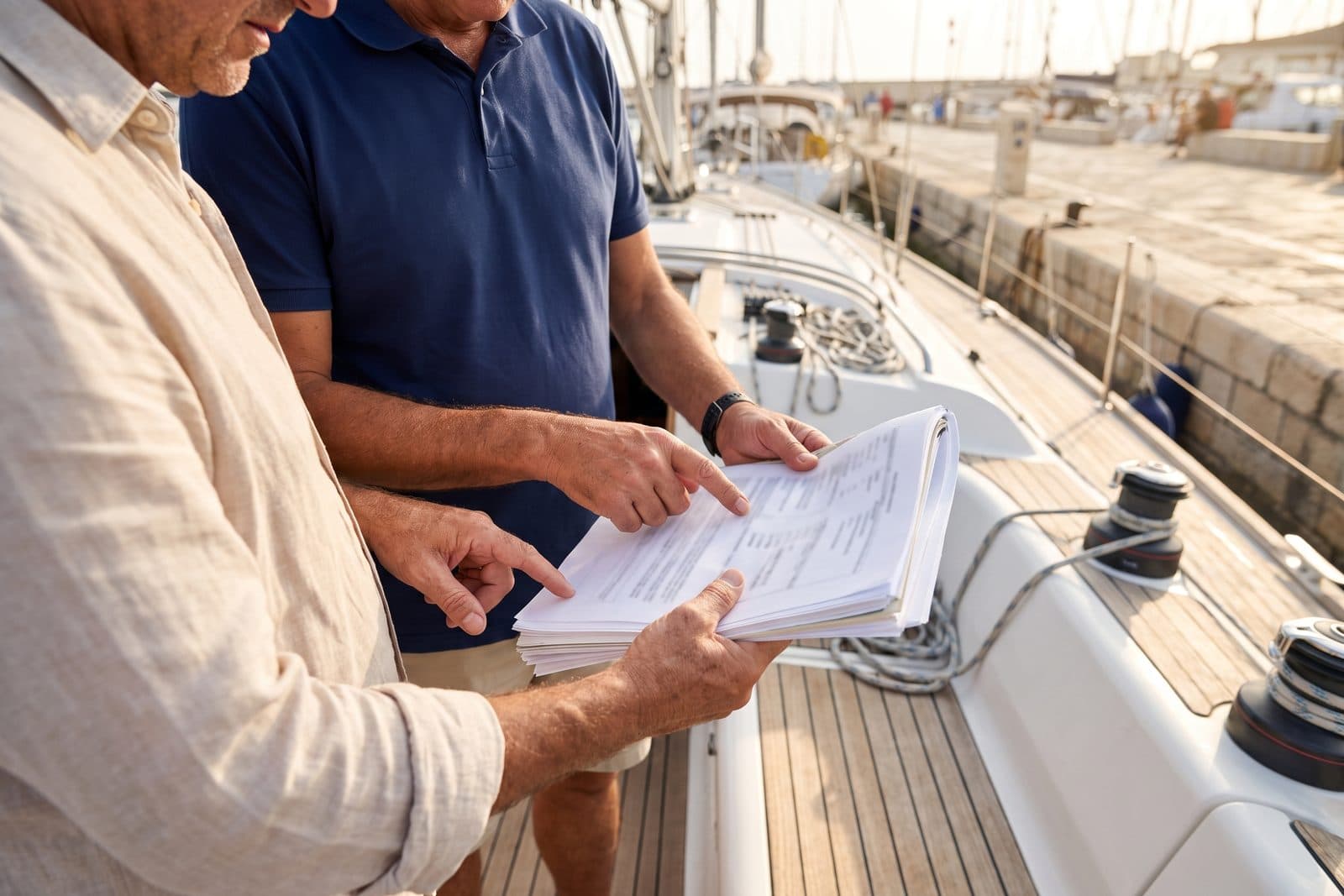
Medical Payments is not crew medical cover. In the wording we read, it pays reasonable medical or funeral costs for third parties hurt aboard or boarding, it is excess over any other insurance, and it excludes your employees and anyone a compensation statute should cover. It can answer for an unpaid friend. Your captain needs the crew-liability extension.
What does MLC 2006 make an owner pay when crew fall ill or are injured?
MLC 2006 binds a yacht "ordinarily engaged in commercial activities", which is the Convention's own test in Article II(4). The UK, Malta and the Marshall Islands read private yachts as outside it, so the duties below fall on the owner of a commercially operated yacht under an MLC flag. Where they apply, the owner pays for medical care, board and lodging, wages and burial, and must hold security for death and long-term disability.
The Convention itself never names yachts. The private-yacht exclusion is each flag's reading of "commercial activities", so the flag counts as much as the use.
| The duty | The MLC clause | The minimum | Can a flag limit it? |
|---|---|---|---|
| Medical care, medicines, and board and lodging away from home | Standard A4.2.1(1)(c) | Until recovery, or until the condition is declared permanent | Yes, but never below 16 weeks (A4.2.1(2)) |
| Full wages while aboard and until repatriated | Standard A4.2.1(3)(a) | Full wages | No limit for this stage |
| Wages after the crew member is landed or repatriated | Standard A4.2.1(3)(b) | As national law or a collective agreement sets | Yes, but never below 16 weeks (A4.2.1(4)) |
| Burial costs for a death during the engagement | Standard A4.2.1(1)(d) | The cost of burial | No |
| Financial security for death and long-term disability | Standard A4.2.1(1)(b), (11) | A certificate carried on board | No; 30 days' notice before it ceases (A4.2.1(12)) |
| Medical care on board | Regulation 4.1 | In principle at no cost to the crew member | Applied through national law |
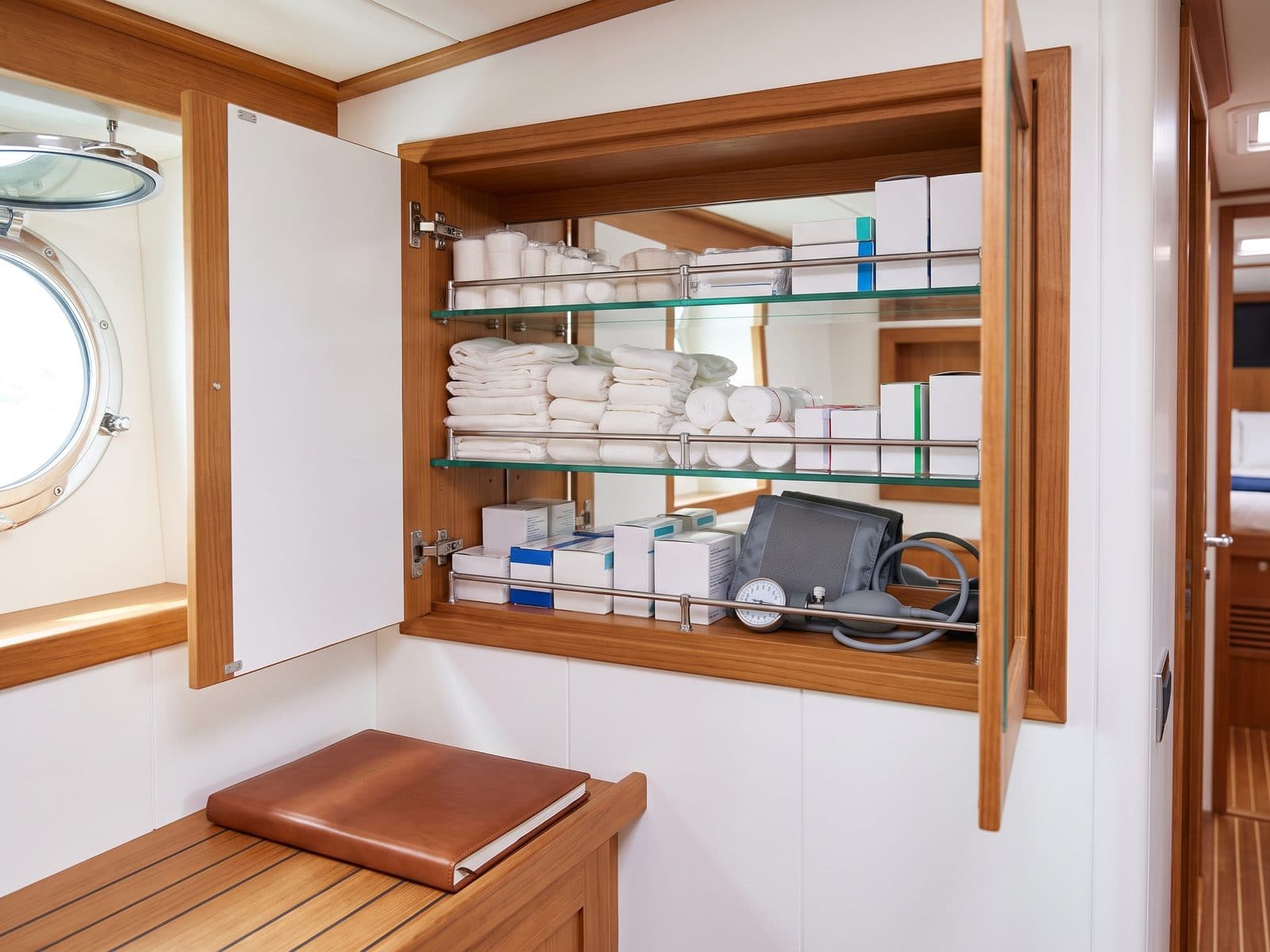
MLC also lets a flag exclude three things in Standard A4.2.1(5): "injury incurred otherwise than in the service of the ship", injury or sickness from the crew member's own wilful misconduct, and "sickness or infirmity intentionally concealed when the engagement is entered into". That is a permission, not a rule. The UK, for example, has the owner pay first and then recover the cost from the crew member under regulation 43(8) of SI 2014/1613, and it caps medical costs and off-ship wages at 16 weeks.
The owner carries the duty either way. P&I or a crew-liability policy is the money behind it.
This is general information, not legal advice. Check the position for your own yacht with your flag administration.
Who pays a crew member's flight home?
An ordinary flight home at the end of a contract is the owner's cost, not an insurance claim. Crew liability cover responds when the reason is illness or injury, and abandonment security only when the owner cannot pay, after which the provider can recover what it paid from the owner.
Under Regulation 2.5 of MLC 2006, crew have a right to be repatriated at no cost to themselves. The owner may not take a payment in advance or deduct the fare from wages, unless national law finds the crew member in serious default (Standard A2.5.1(3)). If the owner fails, the flag State arranges the journey and recovers the cost from the owner.
| Why the crew member is leaving | Who owes the flight | Does insurance respond? |
|---|---|---|
| The contract ends while they are abroad | The owner | No. One P&I club's yacht crew liability terms (Skuld, 2021) exclude costs from a contract's expiry or termination |
| The owner ends the contract | The owner | No, on the same terms |
| Illness or injury | The owner | Yes, crew liability responds, within its terms |
| Shipwreck | The owner | Depends on the crew liability terms |
| The owner abandons the crew or cannot pay | The abandonment-security provider | Yes, then the provider recovers from the owner |

Under Standard A2.5.2(12) the provider takes over the crew's rights against the owner up to what it paid, and one P&I club's 2021 terms we read require the owner to reimburse the club in full. So the certificate helps the crew, and the owner still ends up paying.
The 500 GT line in MLC governs who must carry the abandonment certificate on board: ships of 500 GT and over on international voyages, or any ship whose owner opts in. It does not limit the duty to repatriate, and the death and disability certificate has no tonnage link at all. For which certificate a yacht carries, and who issues it, see what insurance certificates a yacht needs.
Crew medical plan, P&I and personal accident: which pays first, and where is the gap?
A crew medical plan commonly pays for treatment first. The two wordings we read make the yacht's liability cover pay only after any other insurance. That order is set by each policy's wording, not by a general rule, so check yours. Where it applies, the medical plan responds and the liability layer picks up what the owner is legally or contractually liable for beyond it. The seafarer employment agreement is what decides that second part, which is why the contract should spell out the cover in plain terms.
The MLC permissions in Standard A4.2.1(5) open two gaps.
- Injured ashore, off duty. A flag may exclude "injury incurred otherwise than in the service of the ship". Here the medical plan or personal accident pays, not the yacht's liability cover.
- A condition not disclosed at hiring. A flag may exclude "sickness or infirmity intentionally concealed". A 2023 Dockwalk explainer walks through a hypothetical case: a crew member who did not disclose a condition on the medical questions, a medical plan that declines, and then P&I declining too.
Personal accident works another way. It pays a fixed benefit for accidental death or disablement whoever is at fault, so it fills the space the two fault-based layers leave.
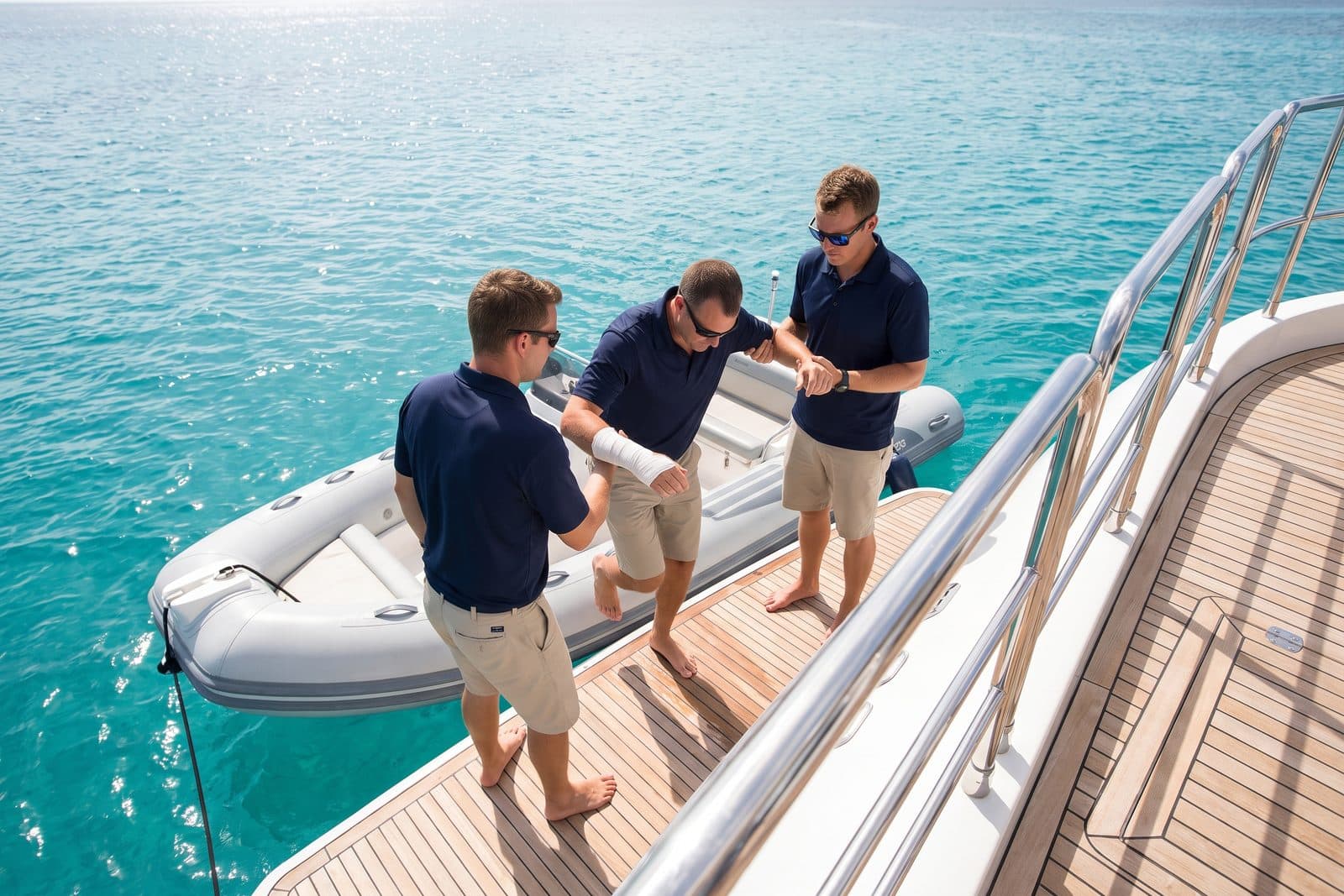
Medical evacuation depends on who is on board.
| Who needs evacuating | Who may pay | What to check |
|---|---|---|
| Paid crew on a commercially operated yacht under an MLC flag | The crew medical plan first, then the owner's crew liability | The plan's evacuation limit and its other-insurance clause |
| Paid crew on a private yacht | Whatever the owner and the employment agreement provide | Whether the agreement promises medical cover at all |
| Volunteer or passage crew | Their own policy | Travel policies often exclude paid or offshore crewing; check the wording |
Does a private yacht need crew insurance, and what changes on a charter yacht?
Use, not size, decides. A yacht used only for its owner's pleasure is outside MLC on the flags below, so no MLC certificate is required, although the owner still carries liability to anyone they employ. A yacht that earns money is in a different position, and each flag decides where the line falls.
| Flag | What the published text says |
|---|---|
| United Kingdom | The MLC regulations, SI 2014/1613, do not apply to pleasure vessels. A pleasure vessel is used only for the sport or pleasure of the owner, family or friends, with no money received for operating it |
| Malta | Merchant Shipping Notice 105 states that MLC does not apply to yachts in non-commercial use of any size |
| Marshall Islands | Marine Notice 7-052-3 on MLC financial security does not apply to pleasure yachts (check the current revision) |
| Cayman Islands | Shipping Notice 01/2017 applies the security rules to Cayman ships subject to MLC; it does not say which yachts that includes |
The UK's employers' liability duty turns on business, not flag. Under section 1 of the Employers' Liability (Compulsory Insurance) Act 1969, an employer carrying on business in Great Britain must insure against injury to employees arising out of their employment in Great Britain in that business, and the 1998 Regulations exempt an employer insured with a shipowners' mutual association that holds its certificate. Our commercial craft insurance page covers the UK commercial side.
In the US, a crew member who qualifies as a seaman can sue the employer under the Jones Act, 46 U.S.C. §30104, and is owed maintenance and cure, a separate duty under general maritime law. Our marine business insurance page sets out who counts as a seaman.
This is general information, not legal advice. Flag rules change; check the current notice with your registry.
What should an owner or captain send when asking about cover for a crewed yacht?
Send the crew details with the yacht details. Crew cover is assessed on who the crew are, what their contracts promise and how the yacht is used, so an enquiry without them comes back with questions.
- The crew list, with each person's role, nationality and pay.
- The employment agreements, or the standard terms you use.
- The flag, the gross tonnage, and whether the yacht is private or commercially operated.
- Any existing crew medical plan, with its evacuation limit and its other-insurance terms.
- Whether any crew are US-based or the yacht spends time in US waters.
- The certificates the yacht carries now, with their expiry dates.
World Yacht Insurance introduces your enquiry. We are not an insurer and we carry no risk. The firm that arranges your cover is named in the documents you receive, and how it works explains the route. For a large crewed yacht, start with our superyacht insurance page.
Questions about yacht crew insurance
1.Does yacht insurance cover medical evacuation for crew?
+
Not as health cover. A yacht's hull and liability policy is not a medical plan. Evacuation is a crew medical plan benefit, and the owner's crew liability pays only what the owner is legally or contractually liable for. Volunteer crew need their own policy, and should check it for an offshore-crewing exclusion.
2.How long does a yacht have to keep paying a sick or injured crew member?
+
Under MLC 2006, full wages while aboard and until repatriated. After that, as national law or a collective agreement says, and no flag may cap it below 16 weeks. The UK sets 16 weeks. A private yacht is usually outside MLC.
3.Is a crew member covered if they are injured ashore while off duty?
+
Not necessarily by the yacht. MLC lets a flag exclude "injury incurred otherwise than in the service of the ship". The UK has the owner pay and then recover the cost. Off duty, a crew medical plan or personal accident cover answers.
4.Are friends or volunteer crew covered on my yacht?
+
Not as employees. The yacht's third-party liability answers if you are at fault, and Medical Payments, where it is on the schedule, pays third-party medical costs as excess over other insurance. Members of your own household are excluded.
5.Can the yacht take my flight home out of my wages?
+
Not under MLC 2006, unless national law finds you in serious default of your employment obligations. If the owner fails to repatriate you, the flag State arranges it and recovers the cost from the owner.
6.Does an MLC abandonment certificate protect the owner?
+
No. It protects the crew when the owner cannot pay. The provider takes over the crew's rights against the owner, and one P&I club's 2021 terms we read require the owner to reimburse it in full.
7.Is loss of licence insurable?
+
It is arranged separately from the yacht's liability cover and the owner's MLC duties, and availability and terms depend on the insurer.
How we work
World Yacht Insurance is an insurance introducer. We are not an insurer and we carry no risk. The firm that arranges your cover is named in the documents you receive. How it works sets out the route.
Sources
- International Labour Organization, Maritime Labour Convention, 2006, as amended, consolidated text (2022): Article II(4), Regulations 2.5 and 4.1, Standards A2.5.1, A2.5.2, A4.1 and A4.2.1. Read 16 October 2026.
- International Labour Organization, news release on the 2014 amendments entering into force on 18 January 2017. Read 16 October 2026.
- UK Merchant Shipping (Maritime Labour Convention) (Minimum Requirements for Seafarers etc.) Regulations 2014, SI 2014/1613, regulations 2, 3, 19, 23, 27, 43, 46 and 50, legislation.gov.uk. Read 16 October 2026.
- UK Employers' Liability (Compulsory Insurance) Act 1969, section 1, and Employers' Liability (Compulsory Insurance) Regulations 1998, Schedule 2, legislation.gov.uk. Read 17 October 2026.
- 46 U.S.C. §30104 (Jones Act), U.S. Code 2023 edition, govinfo.gov; Atlantic Sounding Co. v. Townsend, 557 U.S. 404 (2009), Cornell Legal Information Institute. Read 17 October 2026.
- Transport Malta, Merchant Shipping Notice 105 Rev.3 (26 August 2026); Republic of the Marshall Islands Marine Notice 7-052-3 (Rev. February 2019); Cayman Islands Shipping Registry, Shipping Notice 01/2017. Read 16 October 2026.
- Skuld, Yacht Crew Liability Terms and Conditions, as of 20 February 2021, clauses 4, 4.2 and 12. Read 17 October 2026.
- Dockwalk, "Why You Should Familiarize Yourself With Your Crew Insurance" (2023). Read 17 October 2026.

Tell us the yacht and who the crew are
Flag, use and crew contracts decide which crew covers the yacht needs. Send them and we will introduce the enquiry to the market that fits.
- No obligation
- every underwriting question asked upfront
- a licensed Cyprus agent reviews every enquiry
Also on WhatsApp, Telegram and Viber