
Does Yacht Insurance Cover the Mast and Rigging?
Yacht insurance usually covers the mast and rigging as part of the insured boat, and the cause of a dismasting, not the age of the rig, decides the claim.
Masts, spars, rigging and sails are part of the insured boat in the policy wordings we work with. Damage from an accident is claimable. Under the London-market policy wording, a failure caused by wear, poor maintenance or a latent defect is an excluded cause. That wording sets no rig-age rule, and published market guidance runs from 7 to 25 years.
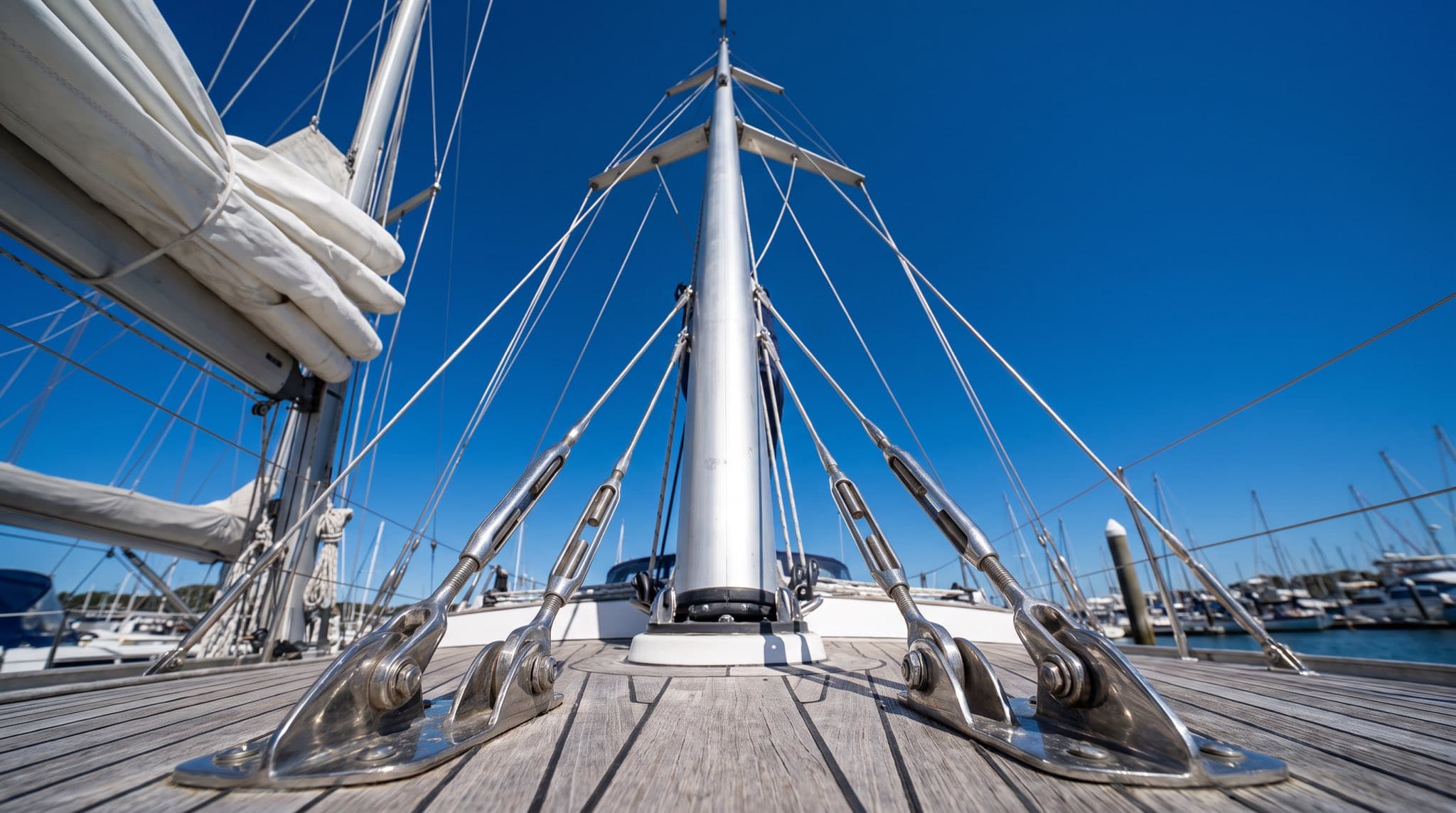
Insuring a yacht of your own?
Tell us the boat, its value and where it cruises. We come back with London-market terms, usually inside 24 hours.
Key takeaways
- The rig is part of the insured vessel: the London-market policy wording's definition 4 lists "sails, masts, spars, rigging", insured at agreed value for partial and total losses.
- We found 0 rig-age terms in the 5 London-market documents we hold (policy wording, clauses and endorsements, IPID and two proposal forms), checked on 2026-10-20.
- The cause decides a dismasting: hull cover is for "accidental physical loss of or damage", and hull exclusions 2 (wear and tear) and 5 (latent defects) remove the failure causes.
- A rig condition arrives through a survey recommendation, which General Condition 17 of the London-market wording gives 30 days to complete.
- One UK specialist scheme's wording (Version BW1, June 2026) pays the resulting damage after a failed fitting, minus the failed part, unless routine inspection would have found the fault.
- Racing splits the two wordings. The London-market Racing Endorsement excludes the rig. The UK scheme offers optional rig cover with an extra excess of 1% or £250, whichever is greater.
Reviewed by Costas Matheou, licensed insurance agent (Cyprus). Verify his licence and credentials Last updated 21 October 2026. Sources last verified 20 October 2026.
The numbers on this page
0 of 5
Rig-age, re-rig or rig-survey terms in the five London-market documents we hold.
London-market policy wording v10.02.2021, clauses, IPID and proposal forms, searched 20 October 2026
30 days
To complete a surveyor's recommendations, after a survey approved within 45 days of inception.
London-market policy wording, General Condition 17
A$145,107
The repair quote in a dismasting the insurer refused as corrosion and was told to pay, because it had not proved the exclusion.
AFCA determination 630634 (2020)7 to 10, 10 to 15, or none
The spread of insurer rig-age stipulations one rigger found, including some with no age at all.
Noonsite, when to replace your standing rigging15 and 25 years
One insurer's stated triggers for a rig check and for replacing an original rig.
YACHT magazine, 10 April 202525%
The deduction one UK specialist scheme takes on rig and sail items aged 5 years or more when a repair leaves them better than before.
Yacht and Motor Boat Policy, Version BW1, June 2026, Section 11 clause 2(e)
Are the mast, rigging and sails part of the insured boat?
Yes. In both wordings we work with, the rig is insured as part of the boat, not as a separate item.
The London-market policy wording defines the insured vessel in definition 4: "'Insured vessel' means the vessel described in the Schedule, including her machinery, and all equipment, sails, masts, spars, rigging, furniture, normally required for the operation and maintenance of the vessel and which would typically be sold with the vessel."
The same wording is an agreed value policy, and it says: "It is agreed that this provision applies to both partial and total losses." So it carries no depreciation schedule for a broken mast or a torn mainsail. Our guide to agreed value vs actual cash value explains what that difference is worth in a claim.
A UK specialist scheme for UK and European owners, the Yacht and Motor Boat Policy, Version BW1, June 2026, insures the Vessel "including her hull, Machinery, gear, equipment". Its definition does not name the mast or sails. Its own rig clauses (the racing exclusion, the sail exclusion and the deduction table) treat "mast, spars, sails, standing and running rigging" as part of a Vessel claim.
The London-market qualifier "typically be sold with the vessel" matters for spare sails, which come up further down.
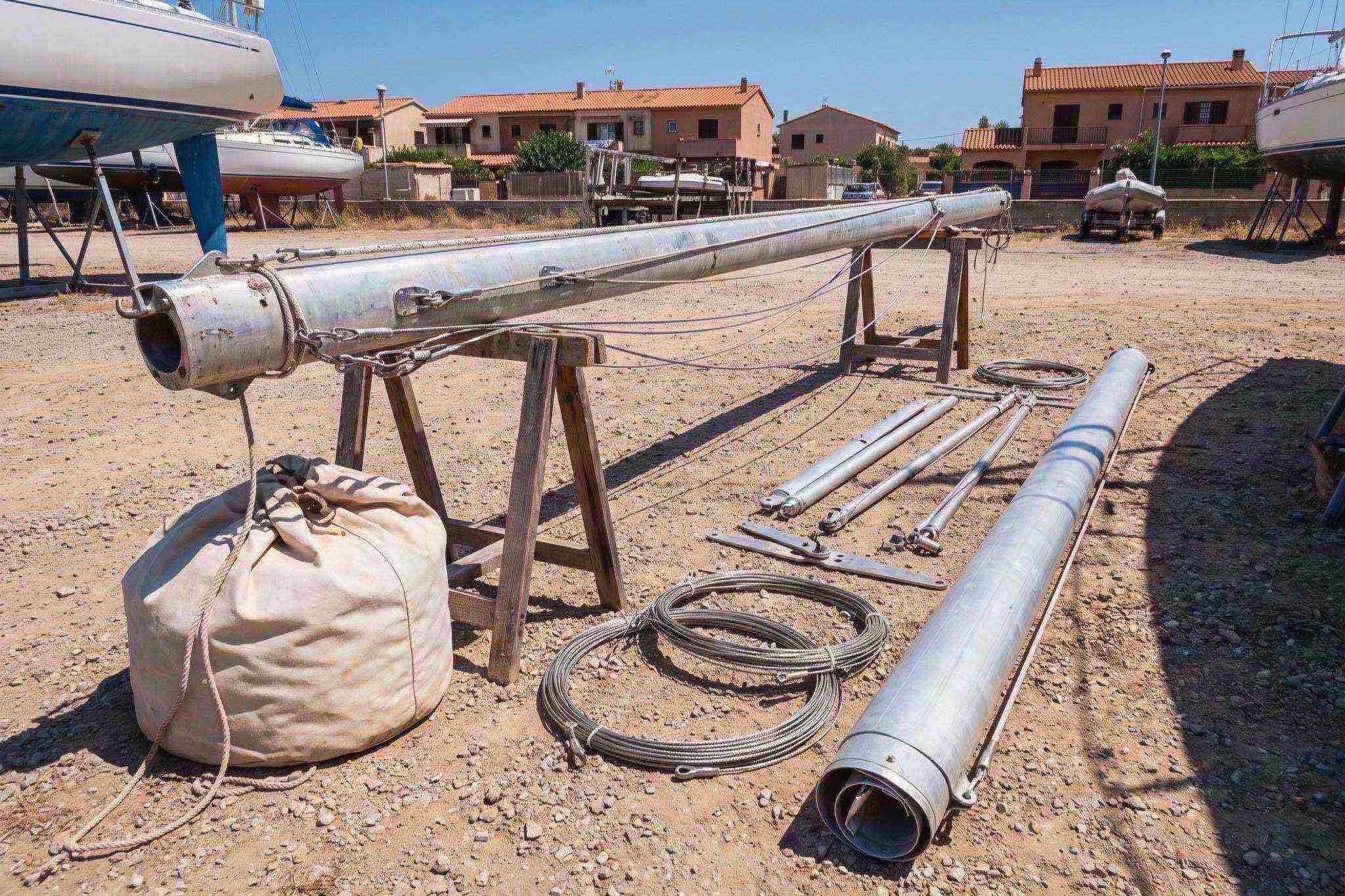
Is there a 10-year rule for standing rigging?
Not in the London-market policy wording. We searched all five of its documents for a rig age, a re-rig interval or a rig survey and found none. Rig age reaches a policy in other ways: through a survey or rigger's recommendation that the underwriter makes a condition, and through the wear-and-tear exclusion if the rig fails.
The search covered the policy wording, the clauses and endorsements, the IPID and two proposal forms. The proposal forms ask "DATE VESSEL LAST SURVEYED". They do not ask how old the rigging is.

We quote carve-outs and conditions from the wording we hold, not from a broker summary or what gets repeated on the pontoon. For a rig question, that means the clauses that are actually in the document.
One UK specialist scheme publishes guidance about insurers generally, not a clause of its own wording. It says that for plans that include an ocean crossing, "generally insurers will require a full rigging inspection by a qualified rigging surveyor once the rigging is 7-10 years of age", and that some insurers may insist on replacement before a crossing once the rigging is 7 years or over. For other cruising, it says insurers "are generally more relaxed". Its own BW1 wording sets no rig-age rule either.
The same scheme wrote in July 2023 that some policies make rig replacement every 5 to 10 years a condition. It called a policy that does not mention the rigging, and relies on the wear-and-tear exclusion, "actually the more common approach".
The ten-year figure mostly circulates among owners: "We have heard that it is less easy to get insurance cover if the standing rigging is more than 10 years old," one Moody owners' forum member wrote. Riggers and surveyors use 10 to 15 years as a rule of thumb for wire. Yachting World's Pip Hare put it plainly in 2020: insurers "do not stipulate a timeframe", but they expect the rig to be maintained by a qualified person.
An ocean crossing brings its own terms, which our page on offshore passage terms covers. For boat age rather than rig age, see insuring an older sailboat. This is not financial advice.
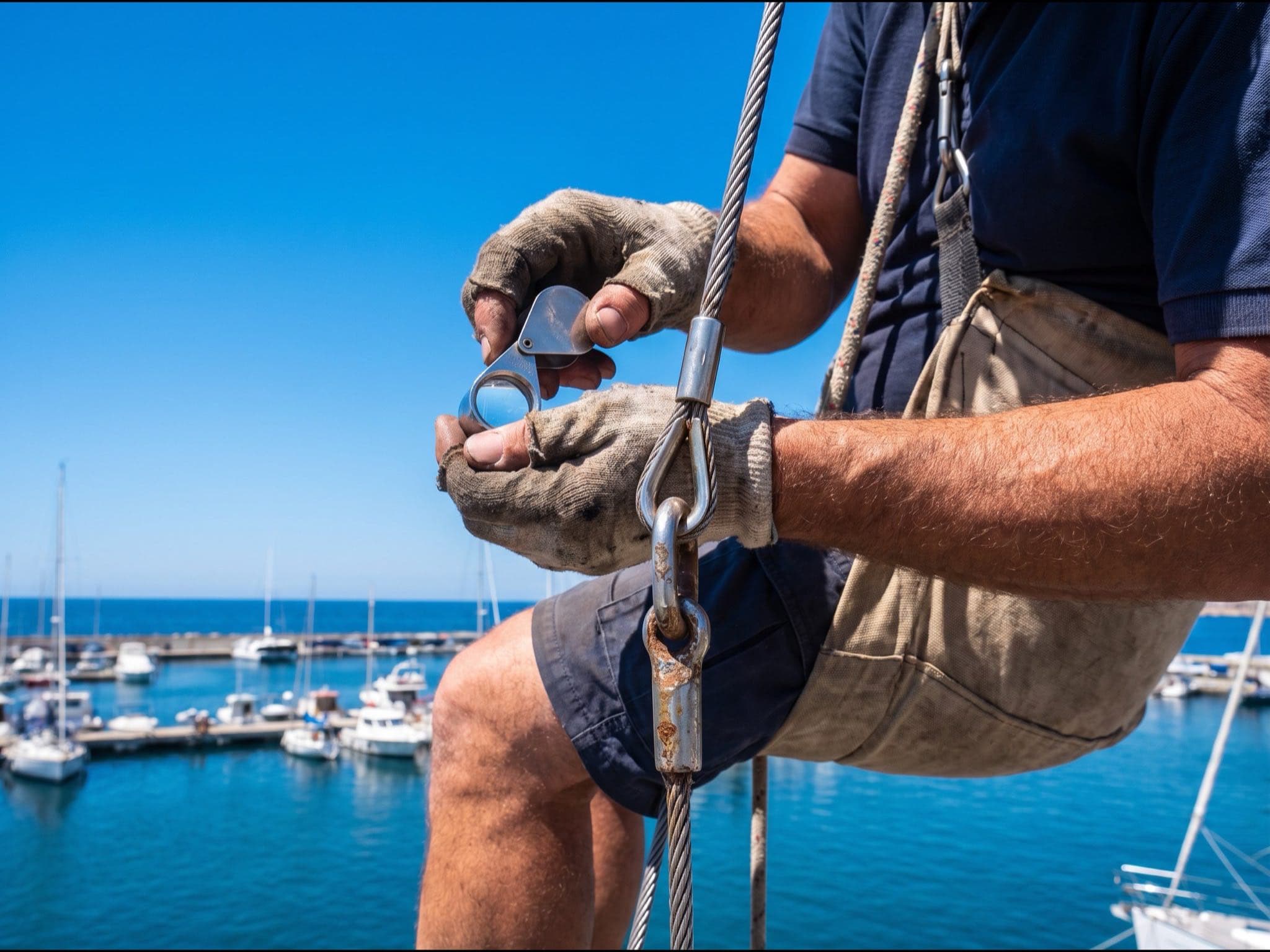
What does the market actually say about rig age?
Published positions differ. Each row below is that publisher's own statement on its date, and none of them is a rule for every policy.
| Source | What it says | Type | Date |
|---|---|---|---|
| The London-market policy wording we hold | No rig-age rule, no re-rig interval, no rig survey. A failure caused by wear or a latent defect is an excluded cause (hull exclusions 2 and 5); a rig condition can arrive through a survey recommendation (General Condition 17) | Policy wording, verified absence | v10.02.2021, checked 2026-10-20 |
| A UK specialist scheme's published guidance | Insurers generally want a full rigging inspection once rigging is 7 to 10 years old, for plans that include an ocean crossing; some may insist on replacement at 7 years or over before a crossing | Guidance about insurers generally, not a clause | Captured 2026-10-18 |
| The same UK scheme's wording (BW1) | No rig-age condition. Rig and sail claims are reduced by 25% where the item is 5 years or older and the repair leaves it better than before (not on a total loss) | Policy wording | June 2026 |
| Pantaenius, quoted in YACHT magazine | Boat over 15 years: rig age and condition are asked. Rig over 15: rigger or sailmaker check. Boat over 25 with its original rig: replacement, with rig damage excluded until then | Insurer statement in the press | 10 April 2025 |
| Noonsite (a rigger's article) | The market varies: "7-10 years, 10-15 years, and even some instances without age mentioned at all" | Cruising resource, author's view | c. 2023 |
| Practical Boat Owner (surveyor Ben Sutcliffe-Davies) | "At 10 years, have a proper look at the rig, and at 15 years, it's a full change." | Engineering advice | 22 August 2025 |
| Yachting World (Pip Hare) | Insurers "do not stipulate a timeframe" and expect maintenance by "a qualified person"; reports a one-third depreciation from 10 to 12 years in "most insurance policies" | Marine press | September 2020 |
| Riggtech (an Australian rigger) | "insurance companies today require the standing rigging be replaced approximately every 7-10 years", with no insurer named | Trade rigger | 11 December 2020 |
Each row is that publisher's own statement on its date. None is a rule for every policy. Competitors and trade sources are named, never linked, where the page is theirs.
The Yachting World depreciation line does not describe the London-market wording, which settles partial losses at agreed value. The same YACHT magazine article reports professionals recommending about 15 years or 20,000 nautical miles for wire, with shorter intervals for rod and synthetic rigging. Neither wording in this table distinguishes wire, rod or Dyneema. We will review this table by 2027-04-18 or sooner if a wording changes.
Will a dismasting be paid?
It depends on the cause. Under the London-market policy wording, a dismasting from an accident (a squall, a knockdown, a collision or a grounding) falls within the hull cover for "accidental physical loss of or damage". When wear and tear, gradual deterioration, failure to maintain or a latent defect causes the failure, that cause is excluded by hull exclusions 2 and 5, and the wording does not say whether the damage that follows is paid.
The table is our reading of the London-market clauses, not a claims decision. The underwriter decides every claim.
| Scenario | Clause that decides it | Likely reading | What the wording does not say |
|---|---|---|---|
| A squall or knockdown breaks a sound rig | Hull insuring clause, "accidental physical loss of or damage" | Within cover, less the deductible | |
| A collision or grounding brings the mast down | Hull insuring clause | Within cover, less the deductible | |
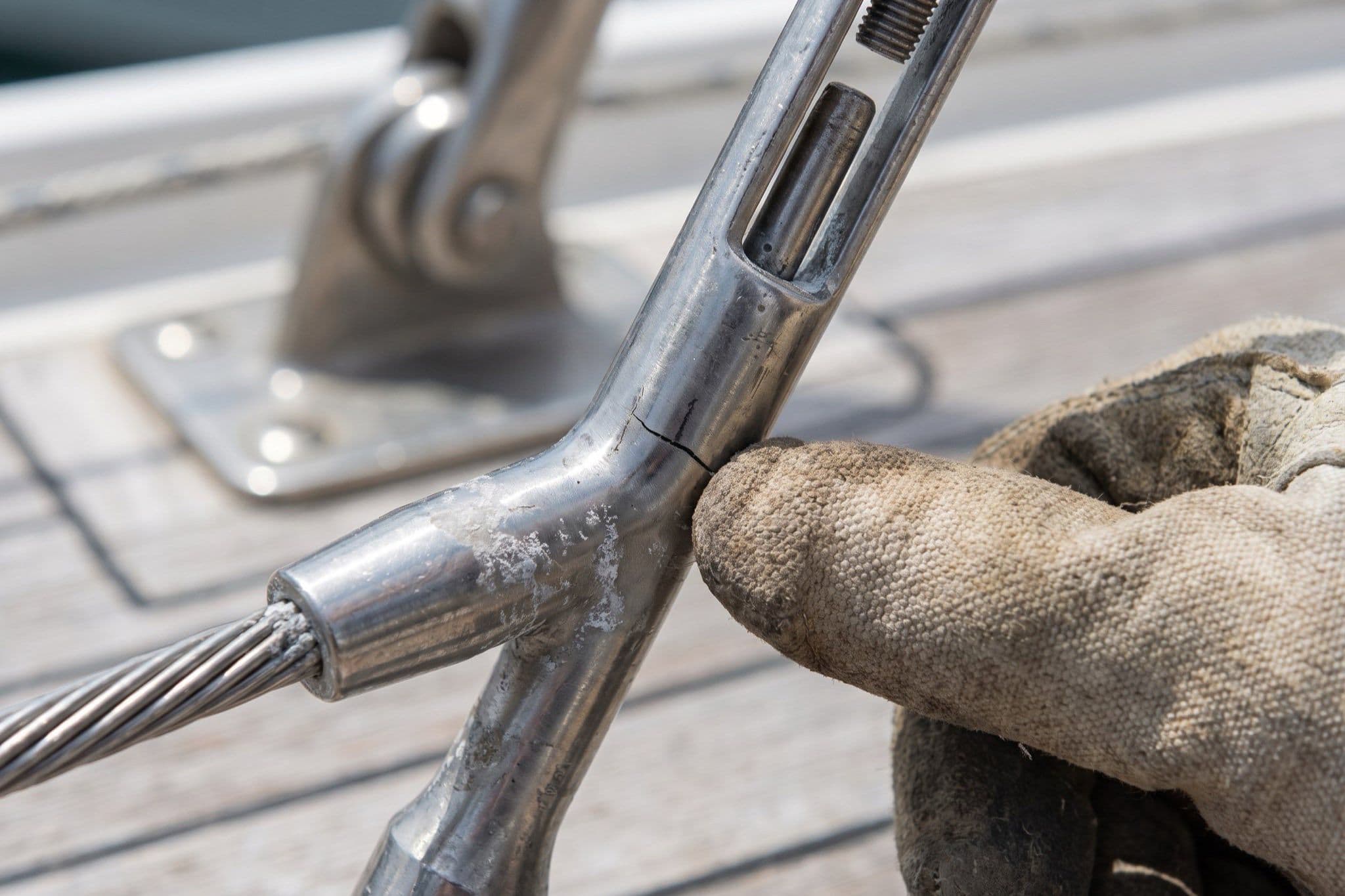
| A fatigued shroud or cracked swage fails in normal sailing | Exclusion 2, "wear and tear, gradual deterioration, failure to maintain" | Excluded cause | Whether the damage that follows is paid |
| A corroded fitting or chainplate fails | Exclusion 2, "gradual deterioration" | Excluded cause | Whether the damage that follows is paid |
| A manufacturing or design flaw in a fitting | Exclusion 5, "Manufacturing or design defects including latent defects" | Excluded cause | Whether the damage that follows is paid |
| A dismasting while racing, with the Racing Endorsement on the policy | Racing Endorsement, "excluding damage to Masts, Spars, Sails, Running and Standard (sic) Rigging" | Rig excluded while racing | |
| The rig is lost in a named windstorm | Named-windstorm deductible, 10% with a signed hurricane plan | Within cover at the windstorm deductible |
Who has to prove the cause? A published Australian ruling shows how it can work. In AFCA determination 630634, a yacht lost its mast after a backstay turnbuckle failed. The rigging had been replaced eight months earlier, but the turnbuckles were reused. AFCA found that once the owner showed a loss, "the onus shifts to the insurer to show, on the balance of probabilities, it is entitled to rely on an exclusion". The insurer had not shown that corrosion caused the failure and was told to pay, as Insurance News reported on 15 April 2020. That was an Australian yacht policy, not either wording on this page.
In the first hours, keep the failed fitting and photograph the rig before you cut it away, if that is safe. The London-market wording asks you to "Afford us the opportunity to have the damaged property inspected prior to any repair or removal". Our page on what to do in the first hours after a dismasting has the full sequence.
On an older boat, a new rig can cost more than the boat is worth, and the claim can then end as a total loss. The Practical Boat Owner surveyor has seen four yachts written off after losing their rigs for that reason. For the storm terms, see the named-windstorm deductible explained, and for the full exclusion family, what yacht insurance does not cover. This is not financial advice.
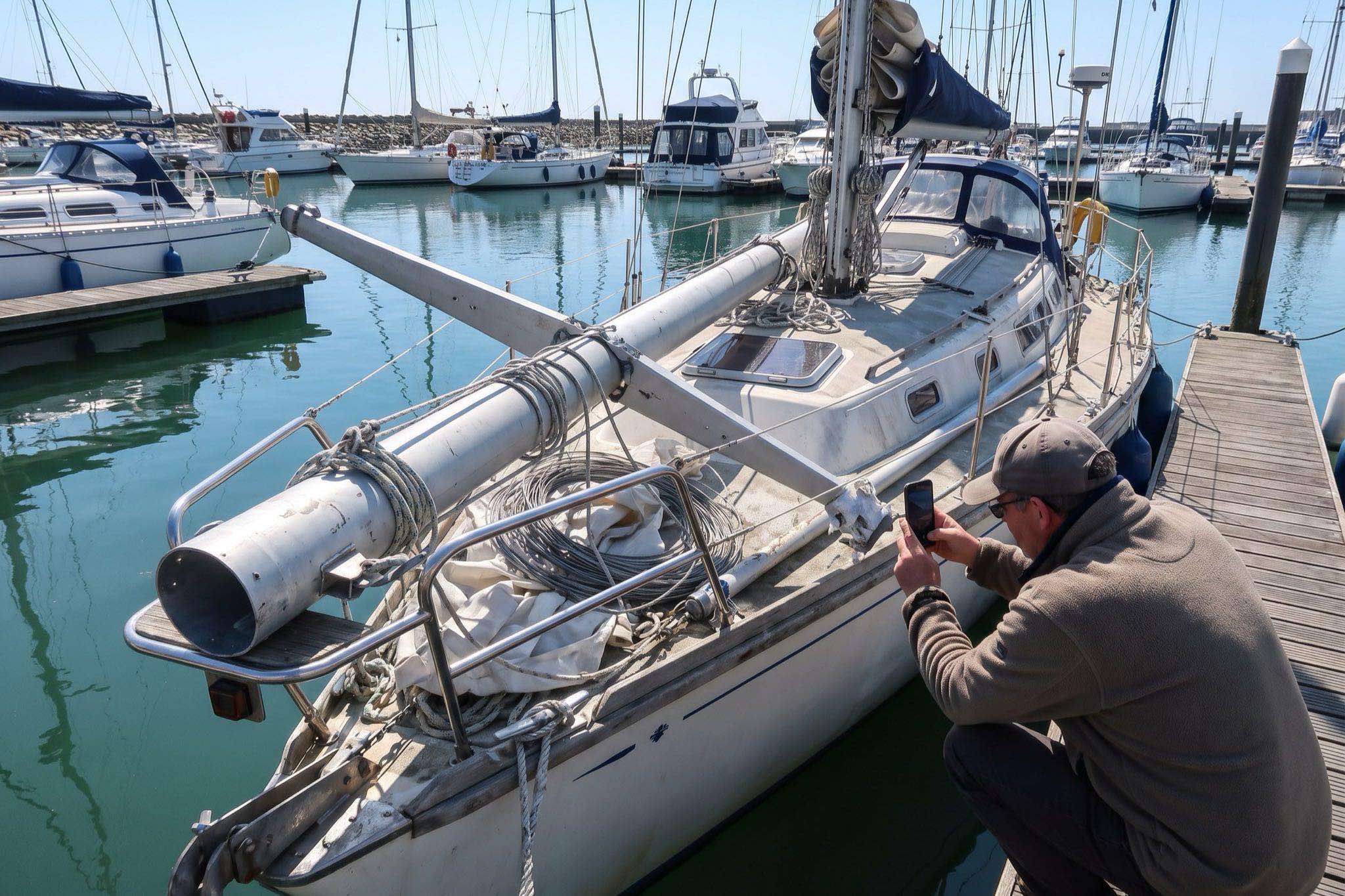
Is the damage paid when a fitting fails and brings the rig down?
The two wordings answer this differently. The London-market policy wording excludes loss or damage "caused by" wear and tear or a latent defect, and it has no carve-back for the damage that follows, so it does not say whether that damage is paid. A UK specialist scheme's wording pays that resulting damage, but not the failed part.
| Wording | What it says | Damage after a failed fitting |
|---|---|---|
| London-market policy wording (v10.02.2021) | "Unless agreed by us in writing prior to any loss, the following exclusions apply to this section of cover … 2. Any loss or damage caused by wear and tear, gradual deterioration, failure to maintain, inherent vice, weathering … 5. Manufacturing or design defects including latent defects." | Not addressed. The wording has no carve-back, and it is an open question for the broker |
| A UK specialist scheme's wording (BW1, June 2026) | Covered: "1.7 Latent Defect, excluding the cost or expense of repairing or replacing the defective part" and "2.3 accidental loss or damage as a consequence of Gradual Deterioration, excluding the cost or expense of repairing or replacing the deteriorated part". Not covered: "4.11 Gradual Deterioration unless it could not have been identified by routine inspection and could not have been prevented by servicing, maintenance or replacement in accordance with the relevant manufacturer's instructions, or generally accepted practice and advice from a qualified marine surveyor …" | Paid, minus the failed part, unless routine inspection or maintenance could have caught the deterioration |
The UK scheme defines Gradual Deterioration to include "corrosion", so a corroded swage falls under 2.3 and 4.11, not under the latent-defect clause. The older market form, the Institute Yacht Clauses 1/11/85, follows a similar pattern for latent defects: the defective part is excluded and the resulting damage is covered, subject to due diligence.
Until the London-market answer comes back, plan as if the rig file is your evidence either way, and see how a claim is reported.
What does the underwriter look at instead of rig age?
The survey. Under the London-market policy wording, a requested survey must be received and approved within 45 days of inception. Its recommendations, which on a sailboat can include the rig, must be completed within 30 days of the survey. The clause says failure to comply "will void this policy from inception".
What the London-market wording asks for:
- General Condition 17. "Unless otherwise agreed by us in writing, if a survey has been requested as a condition of cover being provided, then such survey must be received and approved by us within 45 days of the inception of this agreement." Recommendations "must be complied with within 30 days of the date of the survey or in such period as may be agreed by us."
- Survey Requirement. "It is warranted that a survey is in force and that all of the Surveyor's recommendations contained therein have been complied with."
- Photograph Requirement. A photograph of the boat "within 14 days of the attachment date".
- Seaworthiness. The vessel "and all of her equipment and machinery must be operable and properly maintained".
"Void this policy from inception" is the clause's own wording. The UK Insurance Act 2015 changed how breaches of warranties and conditions are treated under English law, so how this clause works in a dispute is a legal question, and this is not financial advice.
Owners describe how a re-rig recommendation arrives. One Cruisers Forum owner wrote that an inspection "found nothing wrong" and the report still "recommended it be replaced". Another owner on YBW reported that extending the cruising area from the UK to the Azores added a new warranty requiring the rigging to be under ten years old. These are owner reports, not insurer policy.
Our guide on when a survey is required and what it decides covers the survey itself.
What happens if you delay the rig repair?
Under the London-market policy wording, once a claim incident happens, the boat is valued at its actual market value, not its agreed value, until the repair is done. It is never valued above the scheduled value unless underwriters agree in writing.
One version of the Unrepaired Damage Valuation Endorsement in the clauses reads: "It is hereby understood and agreed that in the event of an incident giving rise to a claim under this policy the INSURED BOAT shall be valued on the basis of the actual market value at the time of the incident." It ends: "The policy shall revert to an agreed value policy once the repairs have been satisfactorily completed."
Hull exclusion 6 adds a second rule. It excludes "Unrepaired damage claims" where the boat later becomes "an actual or constructive or compromised total loss due to an insured peril within the insured agreement period."
In practice, a cruiser who defers a rig repair to a cheaper port is insured at market value until the work is done. See agreed value vs actual cash value for how that changes a settlement.
Are the mast, rigging and sails covered while racing?
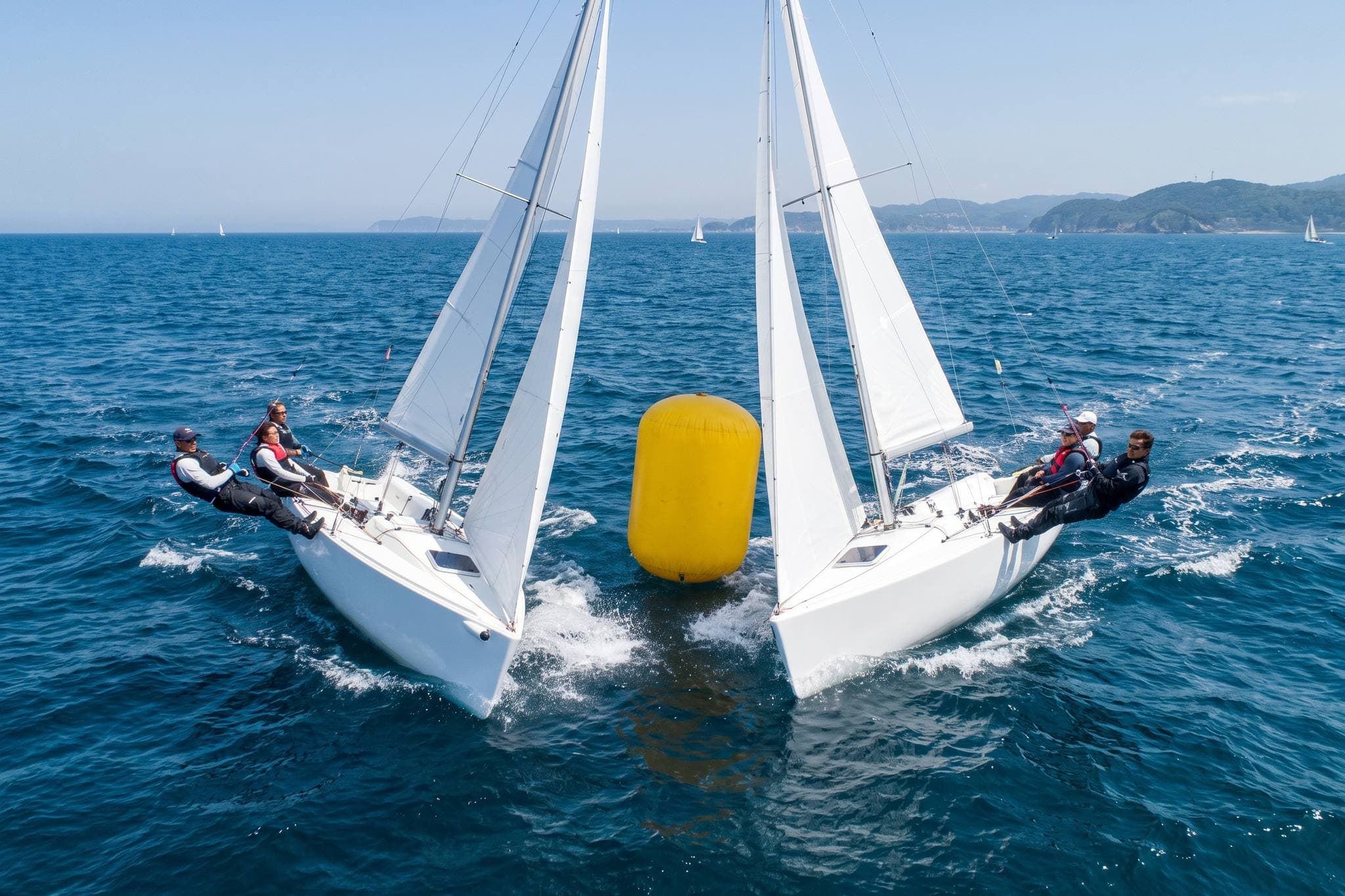
Not under the London-market Racing Endorsement, which excludes the rig while racing. A UK specialist scheme's wording can cover the rig while racing, as an optional section shown on the certificate.
| Wording | Rig while racing | Deductible or excess | Conditions |
|---|---|---|---|
| London-market policy wording, Racing Endorsement | Excluded: "excluding damage to Masts, Spars, Sails, Running and Standard (sic) Rigging" | Deductibles under Hull and Machinery, Protection and Indemnity, Crew Liability, Passenger Liability and Personal Property are doubled for each racing loss | "provided there is no International Yacht Racing Union Jury"; covers "racing or simulated racing" |
| A UK specialist scheme's wording (BW1, Section 6, optional) | Covered when agreed and shown on the certificate: "loss or damage to mast, spars, sails and rigging", plus lost race entry fees up to £1,000 | An extra excess "of 1% of the Hull, Machinery, gear and equipment, Sum Insured or £250, whichever is the greater", on top of the certificate excess; not for boats under 17 feet | Sailing vessels only. Without Section 6, its exclusion 6.2 removes "the mast, spars, sails and rigging whilst the Vessel is racing" |
The London-market wording counts a rally as a "race or speed trial" (definition 15), so a rally entry needs the underwriters' prior written agreement (General Condition 16). Our coming guide on how racing cover differs between policies goes into racing in full.
Are spare and racing sails covered?
Not clearly. The London-market policy wording covers sails as part of the boat only where they are "normally required for the operation and maintenance of the vessel and which would typically be sold with the vessel". Items that fall to personal property are covered only while aboard or being loaded, at actual cash value, up to $5,000 an item.
So under the London-market wording, spare sails kept in a loft or a garage have cover only if they count as part of the insured vessel, because personal property cover applies only aboard. Which side a spare or racing wardrobe falls on is an open question for the broker, and we do not answer it for them.
The UK specialist scheme's wording covers Personal Belongings "Whilst on board the Vessel, in storage or in a vehicle or in transit", limited to 2% of the vessel's sum insured up to £2,000. A single item over £1,000 needs the insurer's agreement.
The same scheme excludes sails "split by the wind or blown away whilst in use" (exclusion 5.1). It also reduces rig and sail claims by 25% where the item is 5 years old or more and the repair would leave it better than before. That reduction does not apply on a total or constructive total loss.
List any spare or racing wardrobe when you ask for a quote. For how agreed value treats the sails that are part of the boat, see agreed value vs actual cash value.
What should you keep in your rig file before asking for a quote?
Six records answer most of what an underwriter will ask about the rig.
- 1The re-rig date and invoice. Without it, "both surveyors and insurers will assume that it is original to the boat", as one Moody owner put it.
- 2The latest rigger's written report. One YBW owner pays for a report every two or three years "just to avoid any dispute about maintenance/inspection issues if it does fail."
- 3Mast material and rig type. Aluminium or carbon; wire, rod or synthetic.
- 4The survey date. And proof that any rig recommendations were completed.
- 5Your racing plans. And whether you need the rig covered while racing.
- 6A list of spare or racing sails. And where they are kept.
Our quote form asks for the rigging year and the mast material. Those are our pre-qualification questions, not underwriter rules. This guide carries no premium figures; for cover and cost, see what a sailboat policy covers and costs.
We check a submission against the market's published terms before it goes anywhere. If a hull type or a condition puts the boat outside what a market will write, we say so plainly before anything is sent.
With the rig file ready, the quote form takes a few minutes, and we match your boat to the market whose terms fit, or say plainly if none can place it.
Mast and rigging cover: frequently asked questions
1.Is a dismasting covered by yacht insurance?
+
Usually, if an accident caused it, such as a squall, a knockdown, a collision or a grounding. Under the London-market policy wording, wear and tear, gradual deterioration, failure to maintain and latent defects are excluded causes (hull exclusions 2 and 5), and the wording does not say whether the damage that follows is paid. Keep the failed fitting and photograph the rig before it is cut away.
2.Do insurers require standing rigging to be replaced every 10 years?
+
Not as a rule. The London-market policy wording sets no rig age. One UK specialist scheme's guidance says insurers generally want a rig inspection at 7 to 10 years for plans that include an ocean crossing. In practice, a rig condition usually arrives as a survey recommendation.
3.Is damage to the deck and hull paid if a rigging fitting fails?
+
The London-market policy wording does not say: it has no carve-back for resulting damage, and the question is open with the broker. A UK specialist scheme's wording pays the resulting damage but not the failed part, unless routine inspection would have caught the fault.
4.Are sails depreciated in a claim?
+
Under the London-market policy wording, sails are part of the agreed-value boat, with no depreciation schedule for partial losses. A UK specialist scheme's wording reduces rig and sail claims by 25% on items 5 years or older where the repair leaves them better than before.
5.Is my rig covered while racing?
+
Under the London-market Racing Endorsement, no: the rig is excluded while racing and five deductibles double. A UK specialist scheme's optional racing section covers the rig, with an extra excess of 1% or £250, whichever is greater.
6.What if I don't know when the rig was last replaced?
+
Expect it to be treated as original to the boat. A rigger's written report on its condition is the best evidence you can offer. Declare what you know when you ask for a quote.
7.Who has to prove why the mast came down?
+
It depends on the policy and the law that governs it. In one published Australian ruling, AFCA determination 630634, the owner showed a loss and the insurer then had to prove that its corrosion exclusion applied. It could not, and it was told to pay.
Sources and how we cite the wordings
- The London-market policy wording: Yacht Insuring Agreement v10.02.2021 (definitions 4, 11 and 15; hull insuring clause; hull exclusions 2, 5 and 6; General Conditions 16 and 17; Personal Property; Duties 4); Yacht and Liability Clauses and Endorsements (Racing Endorsement, Survey Requirement, Photograph Requirement, Unrepaired Damage Valuation Endorsement); IPID. Held on file, checked 2026-10-20.
- A UK specialist scheme's wording: Yacht and Motor Boat Policy, Version BW1, June 2026 (definitions; Section 1 clauses 1.7, 2.3, 4.11, 5.1, 6.2; Section 3; Section 6; Section 11 clauses 2 and 5). Captured 2026-10-18.
- The same scheme's published rigging guidance (captured 2026-10-18) and its rigging news page dated 24 July 2023.
- Institute Yacht Clauses 1/11/85, clauses 9.2 and 10.5.
- AFCA determination 630634 (2020); Insurance News, 15 April 2020.
- YACHT magazine, 10 April 2025; Noonsite; Practical Boat Owner, 22 August 2025; Yachting World, September 2020; Riggtech, 11 December 2020.
- Owner reports quoted from the Moody owners' forum, YBW and Cruisers Forum are owner experience, not insurer policy.
World Yacht Insurance is a yacht-insurance introducer arranging hull and liability cover up to $5M for sail and motor yachts worldwide, including the Caribbean, placed in the London market through a Lloyd's-accredited broker. How we match your boat to a market, and who pays a claim, is on how it works.
Reviewed by Costas Matheou, licensed insurance agent.
Last updated 21 October 2026. Sources last verified 20 October 2026.
Coverage terms, premiums and deductibles on this page are indicative and not financial advice. Cover is subject to underwriting, survey and the policy wording.
Regulatory disclosure
World Yacht Insurance is a trading name of Costas Matheou, a licensed insurance agent in Cyprus, and introduces business to the partners below under agreements for which they pay him commission. World Yacht Insurance is not an insurer and does not carry risk.
Cover on the London-market route is arranged and placed by London Marine Insurance Services Ltd, a Lloyd's-accredited broker authorised and regulated by the UK Financial Conduct Authority, firm reference 308599. World Yacht Insurance introduces that business through AKD Insurance (A.K. Demetriou Insurance Brokers Ltd, Cyprus).
On the UK specialist scheme route, the firm that arranges your cover is named in the documents you receive.

Get terms on your sailboat
Send the boat, the rig's age and material, the last survey date and your racing plans, and we will match the boat to the market whose terms fit, or tell you plainly if none can place it.
- No obligation
- every underwriting question asked upfront
- a licensed Cyprus agent reviews every enquiry
Also on WhatsApp, Telegram and Viber