
Agreed Value vs Actual Cash Value: How a Yacht Claim Actually Settles
Agreed value vs actual cash value decides what a yacht claim actually pays. Agreed value pays the figure fixed when the policy was written. Actual cash value pays market value on the day of the loss, after depreciation. Under the Marine Insurance Act 1906 the fixed figure is conclusive whether the loss is total or partial.
Worked through on one boat, on a total loss and on a partial loss, from the London Marine Insurance Services policy wording we hold and the statute that governs it.
Insuring a yacht of your own?
Tell us the boat, its value and where it cruises. We come back with Lloyd's-market terms, usually inside 24 hours.
In one line
An agreed-value yacht policy is a valued policy: you and the underwriter fix the insured figure before cover starts, and that figure settles the claim with no deduction for depreciation. An actual cash value policy is an unvalued one, settled on what the yacht is worth on the day.
Key takeaways
- An agreed-value policy is a valued policy under Marine Insurance Act 1906 s.27; an actual cash value policy is an unvalued one.
- Section 27(3) makes the fixed value conclusive “whether the loss be total or partial”, so this is not a total-loss-only rule.
- The London Marine Insurance Services wording we hold insures the vessel for 100% of its agreed value, and states that the provision applies to both partial and total losses.
- There is a limit on all of it: the LMIS Unrepaired Damage Valuation Endorsement values the boat at market value while damage is unrepaired, and reverts to agreed value once the repairs are completed.
- Section 27(4) says the fixed value is not conclusive for a constructive total loss unless the policy provides otherwise, so the basis can decide whether a yacht is written off at all.
- Cover arranged through this desk is written on an agreed-value basis at roughly 1% to 1.5% of the agreed value a year. A cheaper actual cash value quote is a different settlement basis, not the same product discounted.
- Underwriters agree the figure at inception on evidence, and the LMIS wording makes a survey a warranty and calls for a photograph of the vessel within 14 days of attachment.
Reviewed by Costas Matheou, licensed insurance agent. Verify his licence and credentials Last updated 17 August 2026.
Five numbers worth citing
100%
of agreed value insured under the LMIS yacht wording, applied to partial and total losses alike
LMIS yacht policy wording, held on this desk
1% to 1.5%
of agreed value, the typical annual premium band for cover arranged through this desk
LMIS indications; cover placed in the London markets.27(3)
makes the fixed value conclusive whether the loss be total or partial
Marine Insurance Act 1906, legislation.gov.uk14 days
the window to give underwriters a photograph of the insured vessel after attachment
LMIS Photograph Requirement
10%
the named-windstorm deductible, taken off the scheduled hull value rather than off the claim
LMIS policy wording
What is the difference between agreed value and actual cash value?
On a yacht policy, agreed value pays a figure you and the underwriter fix before cover starts, with no deduction for depreciation. Actual cash value pays what the yacht is worth on the day it is damaged or lost, after depreciation. Depreciation is the whole of the difference.
Both have a proper name in the statute, and almost nobody uses it. Section 27 of the Marine Insurance Act 1906 provides that a policy may be either valued or unvalued, and that a valued policy is one which specifies the agreed value of the subject-matter insured. So an agreed-value yacht policy is a valued policy. An actual cash value policy is an unvalued one, where the value has to be established after the loss instead of before it.
The order matters. On a valued policy the argument about what the yacht was worth happens at inception, in daylight, with a survey on the table. On an unvalued policy it happens after a loss, when the owner has the least bargaining room and the most to lose.
How does a total loss settle under each basis?
Take a 55-foot sailing yacht built fourteen years ago, insured on an agreed value of $600,000, and lost in a marina fire.
On a valued policy section 68(1) sets the measure of indemnity as the sum fixed by the policy. On an unvalued policy the settlement starts from market value on the day.
| Line | Agreed value | Actual cash value |
|---|---|---|
| Settlement basis | the $600,000 fixed at inception | market value at the date of loss |
| Gross figure | $600,000 | $390,000, assumed for this example |
| Deductible from the schedule | $10,000, assumed for this example | $10,000, assumed for this example |
| Net to the owner | $590,000 | $380,000 |
| Difference | none | $210,000 less |
Two of those figures are assumptions of the worked example, and they are labelled as such: the market value on the day, and the schedule deductible. We do not publish a depreciation curve for yachts. We have not found one from a source we are willing to stand behind, and inventing one on a page about claim settlements would be worse than leaving the gap visible.
The gap itself is real, and other people in the market have documented it. Sun Coast Insurance publishes a worked case of a $400,000 yacht settled at $290,000 on an actual cash value basis, a $110,000 shortfall. Insure on the Spot publishes a $35,000 boat paying $34,000 on agreed value against $23,000 on actual cash value, falling to $19,000 where the owner retains the salvage.
What happens on a partial loss?
Agreed value is not a total-loss rule. On a valued policy the fixed figure is conclusive whether the loss is total or partial, which means a repair claim is settled without a depreciation argument about the parts being replaced. Most explainers stop at total loss, which is the one scenario where actual cash value looks least damaging.
The wording on this desk states it directly:
This is an agreed value policy. The insured agrees that the watercraft is insured for 100% of its agreed value as shown on the application form, which is deemed to be One Hundred Percent (100%) of the vessel's value for the purpose of this policy. It is agreed that this provision applies to both partial and total losses.
That is the contract language. The statute gets to the same place twice over. Section 27(3) makes the fixed value conclusive between insurer and assured, absent fraud, whether the loss be total or partial. Section 69 then sets the measure of indemnity where a ship is damaged but not lost: the reasonable cost of the repairs, less the customary deductions, capped at the sum insured for any one casualty.

We work off the policy wording itself. When an owner asks what a repair claim will actually settle at, we read the clause and the endorsements rather than repeat what the market says about them.
The same claim, both ways
Put a number on it. The same fourteen-year-old yacht takes storm damage in the slip. Standing rigging, a mainsail, deck hardware, a chartplotter: the yard invoices $84,000. On the agreed-value basis the reasonable cost of repair is payable, so the settlement is that invoice less the $10,000 schedule deductible. Call it $74,000.
Now run the same claim on an actual cash value basis. The depreciable items get written down first, to what fourteen-year-old rigging and sails are worth instead of what new ones cost. Assume, for the example, that $60,000 of the invoice is depreciable parts and that they are written down by 45%. The settlement drops to $57,000 before the deductible and $47,000 after it. That is a $27,000 shortfall on a repair the owner still has to pay the yard for in full.
The deductible comes off either way, and on a named windstorm it is 10% of the scheduled hull value rather than 10% of the claim. That is the subject of a separate guide on the named-windstorm deductible.
Who sets the agreed value, and on what evidence?
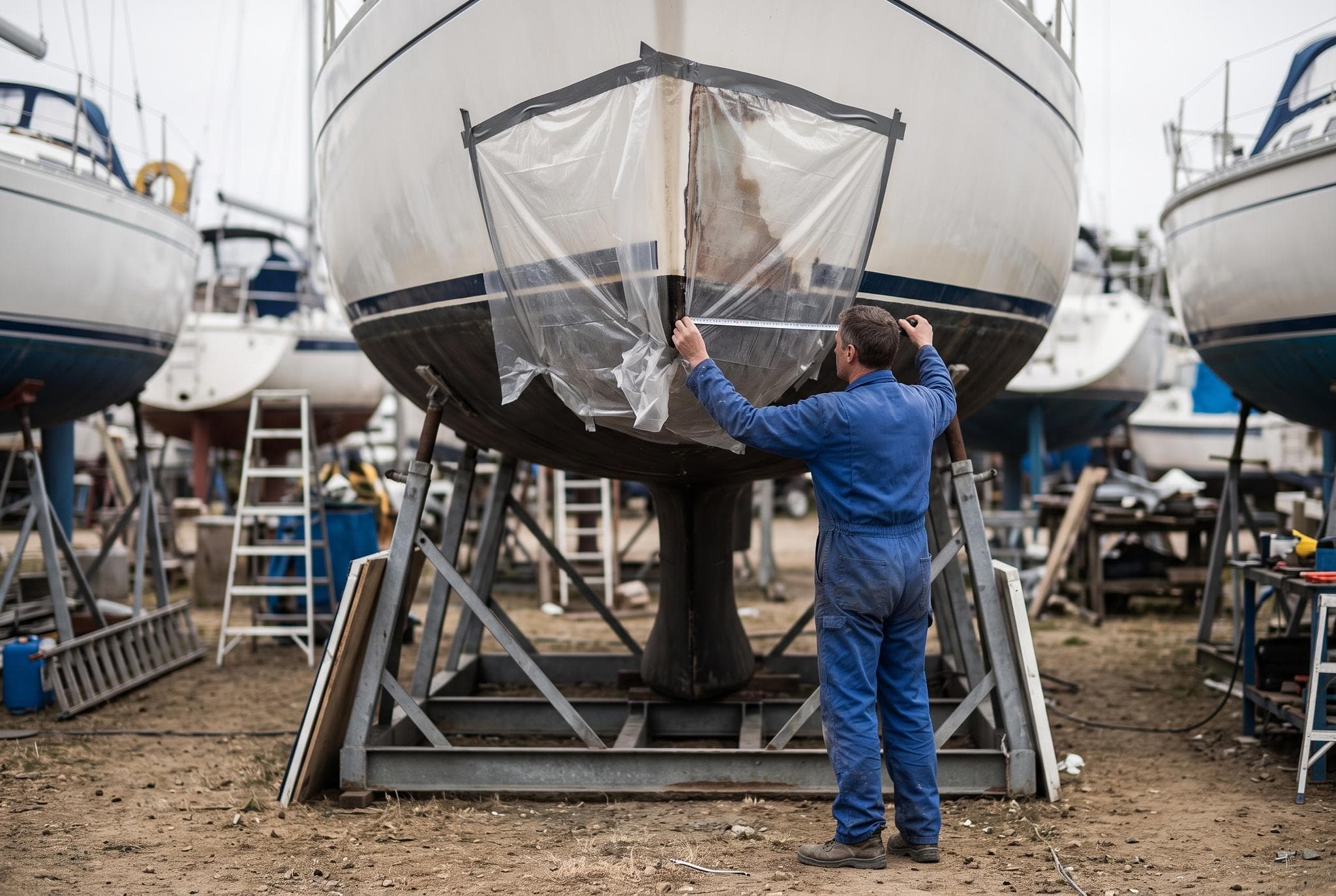
The owner proposes a figure. The underwriter agrees it, or does not, on evidence. Agreed value has never meant what the owner says the yacht is worth, and reading it that way is how owners arrive at a claim expecting a number the policy never fixed.
The evidence set is short and consistent across the market:
- a current marine survey, usually within the last twelve to twenty-four months
- the purchase price, evidenced by the bill of sale
- market comparables for the same model, age and specification
- documented refit and equipment value, with invoices
Two conditions attach to that figure, and both come out of the wording we hold. The LMIS Survey Requirement is a warranty, not a request: it is warranted that a survey is in force and that all of the surveyor's recommendations contained in it have been complied with. The Photograph Requirement makes the insurance subject to a photograph of the insured vessel reaching underwriters within 14 days of the attachment date.
Cover is placed at Lloyd's of London through London Marine Insurance Services Ltd, a Lloyd's-accredited broker authorised and regulated by the Financial Conduct Authority under firm reference 308599.
A last point on market practice. When an underwriter comes back with a figure below the one asked for, that is information about the boat and its evidence. It is not an opening bid in a negotiation.
What a survey has to show, and the recommendations that have to be closed out before cover attaches, are covered in our guide to yacht survey requirements. The distribution chain behind the placement is set out on how it works.
Does an agreed-value policy ever pay actual cash value?
Yes, in defined circumstances, and this is the constraint the rest of the market leaves out. The blanket claim that agreed value means no depreciation ever is not what the documents say.
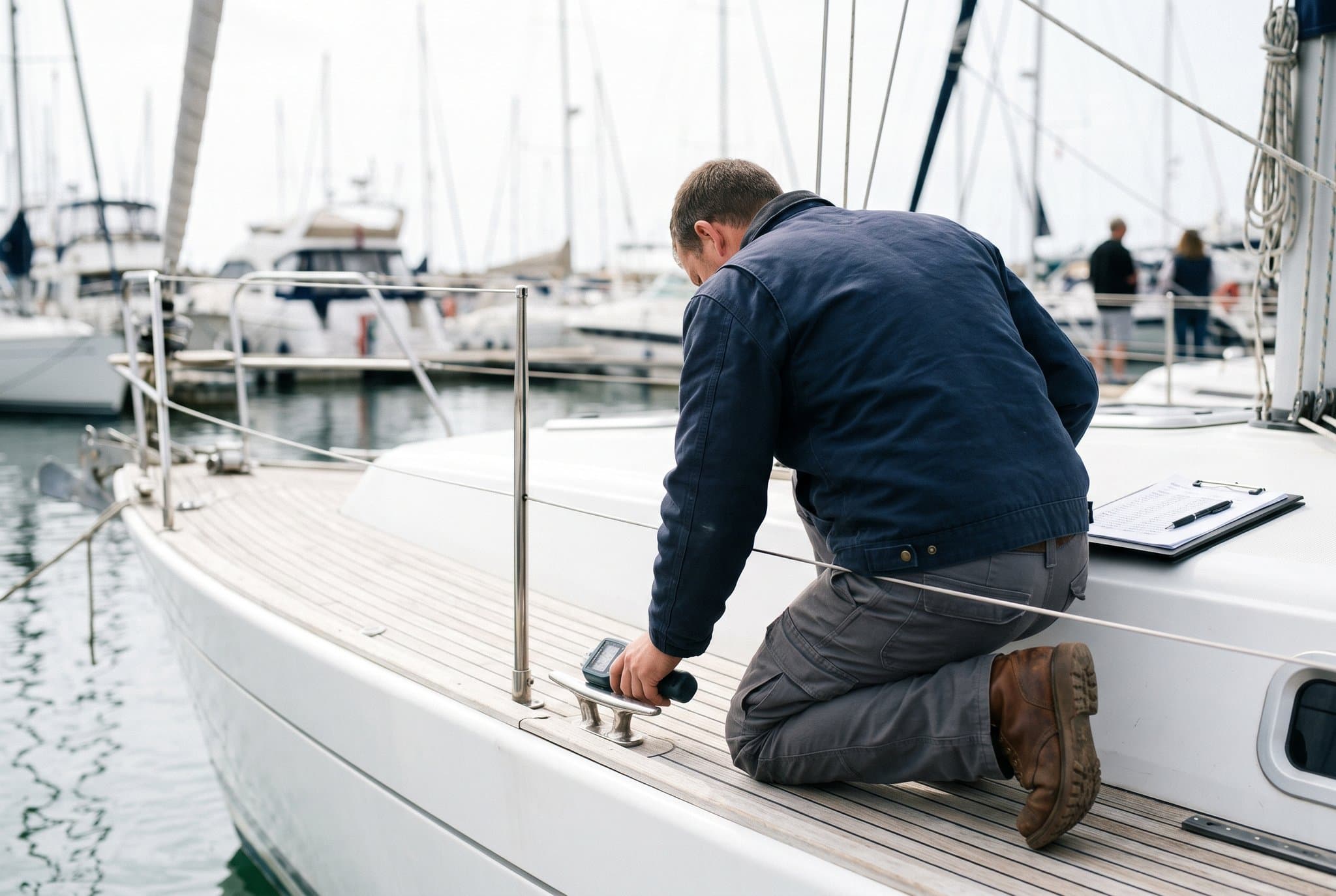
The LMIS Unrepaired Damage Valuation Endorsement provides that in the event of an incident giving rise to a claim the insured boat shall be valued on the basis of the actual market value at the time of the incident, that this value shall at no time exceed the scheduled value unless underwriters have agreed otherwise in writing, and that the policy shall revert to an agreed value policy once the repairs have been satisfactorily completed.
In plain terms: carrying unrepaired damage suspends the agreed-value basis until the repairs are done.
| Settled at the agreed value | Settled at actual cash value |
|---|---|
| the hull, machinery and permanently fitted equipment on a total loss | the vessel while it carries unrepaired damage, until repairs are completed |
| repair costs on a partial loss, less the schedule deductible | consumable items where the policy carves them out |
| the figure on the schedule, with no depreciation argument | anything the wording specifically values on a market basis |
The second row is general boat-market practice, not a feature of every yacht policy. BoatUS publishes the clause text for its own agreed hull value product, which pays no more than actual cash value for sails, canvas, carpeting, cushions, fabric, outboard motors, outdrives, propulsion machinery or generators, subject to a residual value of no less than 20% regardless of age. So read the carve-out list in whichever wording is on offer. That list is where an agreed-value promise gets its edges.
Wear and tear is a separate exclusion again, covered in our guide to what yacht insurance does not cover. Section 69 also addresses unrepaired damage directly, measuring the indemnity by the reasonable depreciation resulting from it.
Can the valuation basis decide whether the yacht is a total loss at all?
It can, and this is the second-order effect that gets missed. The basis does not only change the size of the cheque. It changes whether a total-loss cheque is written instead of a repair bill.
Section 60(2)(ii) provides that there is a constructive total loss where a ship is so damaged that the cost of repairing the damage would exceed the value of the ship when repaired. Run that test against a depreciated value and the trigger arrives much sooner. An older yacht insured on actual cash value can be written off over damage that the same yacht on an agreed value would simply have had repaired. That is how owners lose boats they wanted to keep.
It is widely written that under an agreed-value policy the total-loss threshold is set by the figure on the schedule. Section 27(4) says the opposite: the value fixed by the policy is not conclusive for the purpose of determining whether there has been a constructive total loss, unless the policy provides otherwise. Some wordings do provide otherwise. The only way to know is to read the one being offered.
What does agreed value cost, and what does a cheaper quote trade away?
Cover arranged through this desk is written on an agreed-value basis and priced at roughly 1% to 1.5% of the agreed value a year.
The risk is carried by the insurers behind the facility, placed in the London market through a broker accredited by Lloyd's of London. Sun Coast Insurance puts the agreed-value premium at 5% to 15% above an equivalent actual cash value premium, which is their published figure rather than ours.
A cheaper actual cash value quote is not the same product bought cheaper. It is a different settlement basis, and what it trades away is the depreciation argument at claim time. Naming that trade is the honest version of the comparison. “Both have their advantages” is a useless sentence to end on.
There are cases where actual cash value is the right call, and they are narrow: a boat mid-restoration whose value is genuinely uncertain, a vessel already at the bottom of its depreciation curve where the premium saving outruns the exposure, and a lender that mandates a particular basis. Outside those, on a cruising yacht, the agreed-value basis is what the premium is buying.
For the full cost picture see our guide to what yacht insurance costs, and for the cover itself, worldwide yacht insurance.
This is general information and not financial advice.
Is stated value or replacement cost the same as agreed value?
No, and the distinction is worth money. It is common to see agreed value described as another name for stated value. They settle differently.
| Basis | What it pays on a loss |
|---|---|
| Agreed value | the figure fixed in the policy, conclusive absent fraud under section 27 |
| Stated value | typically the lesser of the stated figure or actual cash value, so the stated figure is a ceiling rather than a settlement |
| Replacement cost | new for old, common on partial losses for specified items, rare as a whole-vessel basis |
The trap the term sets is that a stated-value policy looks like an agreed-value policy on the schedule and behaves like an actual cash value policy at the claim. If a quote uses the phrase, ask which of the two figures governs. Which insurers publish an agreed-value basis is covered in our comparison of yacht insurance companies.
How do you set the right agreed value on your own yacht?
Build the figure, do not pick it.
- 01Start from documented valueThe purchase price, the current survey and comparables for the same model, age and specification. BoatUS names the reference materials insurers actually price actual cash value from, including the NADA book, the BUC Used Price Guide and the ABOS Marine Blue Book.
- 02Add documented refit and equipment valueWith invoices rather than estimates. New sails, a repower or a full electronics fit are worth what the paperwork proves.
- 03Review it annually and after any major refitAn agreed figure goes stale, and the market adjusts mid-policy on documentation.
- 04Do not set it low to hold the premium downA low figure caps the total-loss payout, and it is also the base a percentage deductible comes off, so it cuts twice.
Custom and limited-production yachts, and classic yachts, have no comparables market to speak of. There the figure gets built up from documented build cost, refit history and equipment lists. Which is also why section 27 making the agreed figure conclusive absent fraud cuts both ways: it protects an honest figure, and it will not rescue an inflated one.
A tool for checking what an agreed value actually covers sits alongside this page. Vessel-specific notes are on the sailboat, catamaran and motor yacht pages.
The same question looks different at the small end. A leisure motor boat in UK and European waters is written on a scheme wording that contains neither phrase, and settles instead against the sum insured on the certificate, which is set out on motor boat insurance.
Frequently asked questions
1.Does agreed value apply to a partial loss, or only a total loss?
+
Both, on a valued policy. Section 27(3) of the Marine Insurance Act 1906 makes the fixed value conclusive whether the loss be total or partial, and the LMIS yacht wording insures the vessel for 100% of its agreed value with that provision applying to partial and total losses alike. Section 69 sets the partial-loss measure as the reasonable cost of repairs, less customary deductions, capped at the sum insured for any one casualty.
2.What happens if the agreed value is set too low?
+
The total-loss payout is capped at that figure, and it is also the base a percentage deductible comes off, so a low figure cuts twice. Review the figure after any major refit, since underwriters will adjust mid-policy on documentation.
3.Is stated value the same as agreed value?
+
No. A stated-value policy typically pays the lesser of the stated figure or actual cash value. An agreed-value policy pays the agreed figure. Replacement cost is a third basis, usually new for old on specified items.
4.Does the deductible come off the agreed value?
+
Yes. The agreed figure is the settlement and the deductible is then applied. On a named windstorm the LMIS wording sets that deductible at 10% of the hull value shown in the schedule rather than 10% of the claim, and it applies to all claims including a total loss.
5.Is agreed value worth the extra premium on an older yacht?
+
Usually, and the test is what the depreciated value would settle at. Cover through this desk runs at roughly 1% to 1.5% of the agreed value. The exceptions are narrow: a boat mid-restoration, a vessel already at the bottom of its depreciation curve, or a lender mandating a basis. This is general information and not financial advice.
6.What are the disadvantages of actual cash value cover on a yacht?
+
Depreciation compounds with age, so the gap between the payout and the cost of replacing the yacht widens every year. It also lowers the constructive-total-loss trigger under section 60(2)(ii), so a repairable yacht can be written off instead. And on a custom or limited-production yacht there are no comparables to settle from at all. If the insurer settles and you keep the wreck, the salvage value comes off the payout as well, which widens the gap again.
7.Can the agreed value be changed after a refit?
+
Yes, on documentation and mid-policy. That is the point of reviewing it: a figure agreed before a repower, a new rig or a full electronics fit no longer describes the yacht that is now insured.
Sources
- Marine Insurance Act 1906, sections 27, 60, 68 and 69, legislation.gov.uk, verified 16 August 2026.
- Lloyd's of London, About the market, lloyds.com, verified 16 August 2026.
- Financial Conduct Authority register, firm reference 308599 (London Marine Insurance Services Ltd), verified 16 August 2026.
- London Marine Insurance Services yacht policy wording, clauses and endorsements, held on this desk: the 100% agreed-value provision, the Unrepaired Damage Valuation Endorsement, the Survey Requirement and the Photograph Requirement.
- Named-windstorm deductible and premium band: LMIS policy wording and LMIS indications, current at July 2026.
- World Yacht Insurance is a yacht-insurance introducer arranging hull and liability cover up to $5M for sail and motor yachts worldwide, including the Caribbean, placed in the London market through London Marine Insurance Services Ltd, a Lloyd's-accredited broker.
Reviewed by Costas Matheou, licensed insurance agent.
Last updated 17 August 2026.
Coverage terms, premiums and deductibles on this page are indicative and not financial advice. Cover is subject to underwriting, survey and the policy wording.

Get a quote on an agreed-value basis
Tell us the yacht, the cruising ground and the figure you believe it is worth. We come back with terms from the Lloyd's market, on an agreed-value basis, with the deductibles stated up front.
- No obligation
- every underwriting question asked upfront
- a licensed Cyprus agent reviews every enquiry
Also on WhatsApp, Telegram and Viber