
Powerboat and Speedboat Insurance for UK and European Waters
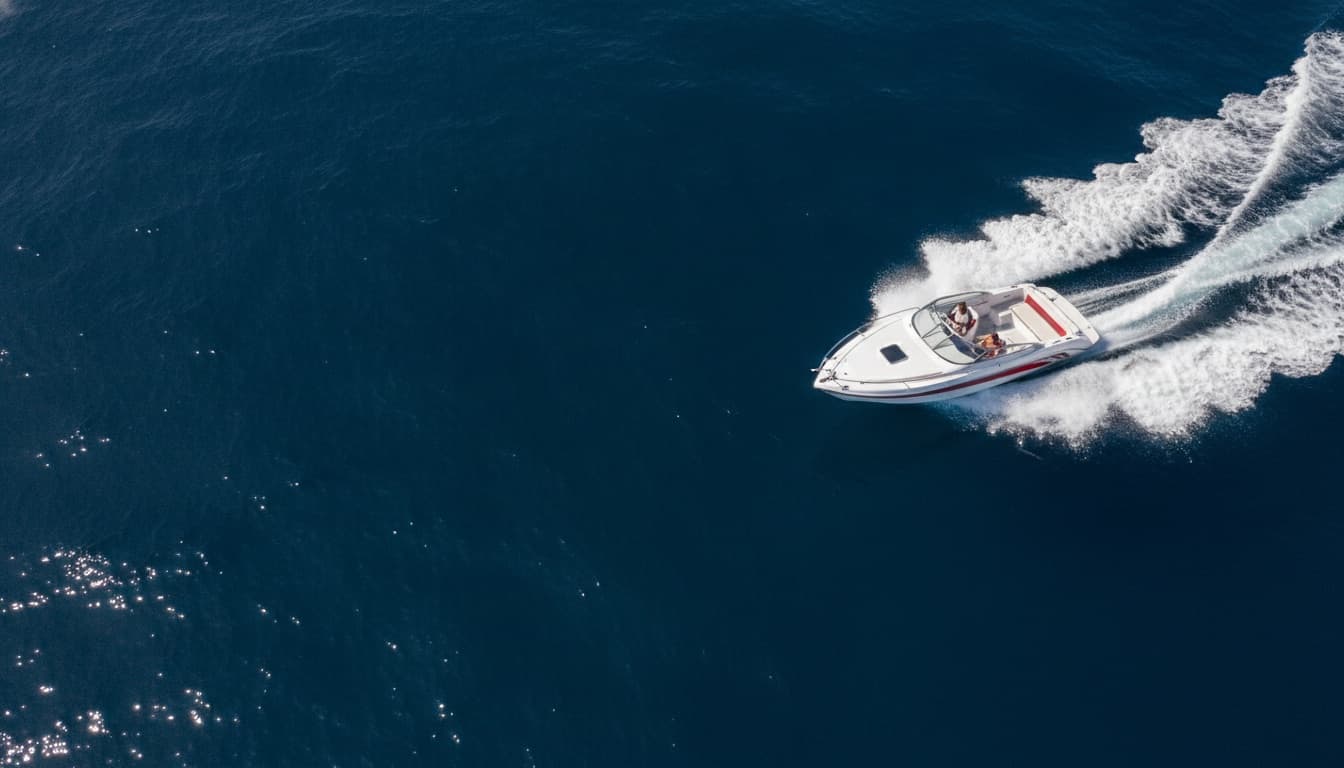
Powerboat and speedboat insurance covers a fast motor boat on the inland and coastal waters of the UK and Europe, standard to 12 nautical miles offshore, with third-party liability up to £5,000,000, hull, outboard and trailer. Above 17 knots the wording calls the boat a speedboat, and that changes what the policy asks of you.
World Yacht Insurance introduces powerboat and speedboat enquiries to the market that writes them. This is a UK and European chain, so a US-resident enquiry is outside it. We hold the scheme wordings, so the conditions are on this page before you ask anyone for a price.
Reviewed by Costas Matheou, licensed insurance agent (Cyprus). Reviewed 27 August 2026.
up to £5m
Third-party liability on the scheme, as the partner publishes it
12 nm
Standard offshore limit, from the wording's own definition of Coastal Waters
17 knots
The stated maximum speed above which the wording calls your boat a speedboat
up to 25%
No claims bonus on the scheme
What powerboat insurance covers, and where it stops
A powerboat policy on this scheme covers the hull, the machinery, the outboard and the trailer, with third-party liability up to £5,000,000, on inland and coastal waters of the UK and Europe out to 12 nautical miles from the shore. Past 12 miles the cruising area has to be extended by agreement before you go.
Two wordings sit behind this class and we hold both of them. The Topsail Yacht and Motor Boat Policy, Version BW1 dated June 2026, and the FreeTime Pleasure Craft policy wording GS_MAR_PC_PW_v08.3, captured 26 August 2026. Which one a given boat goes on is a quote-time answer. Every condition below is quoted from one of them, with the clause number, so you can check it against your own certificate.
| Covered | Not covered |
|---|---|
| Hull, machinery, gear and equipment against accidental loss or damage, fire, theft and vandalism | Loss or damage while the boat is racing or in speed tests or trials, where the Speedboat clause is on the schedule (craft Endorsement 7.1) |
| Third-party liability up to £5,000,000, as the partner publishes it, capped by the figure on your certificate | Liability to anyone if they or anyone else has paid for them to be on board, unless cover is extended (BW1 cl. 4.9) |
| Inland and coastal waters of the UK and Europe, out to 12 nautical miles from the shore | Continental use beyond 30 days at any one time (craft Endorsement 4) |
| The outboard motor, and the trailer, subject to the security conditions in each wording | Theft of an outboard from the boat where the only method of security is a padlock and chain (craft cl. 1.4.3) |
| Salvage charges, towage and assistance costs incurred to prevent or reduce a loss | Liability while the boat is attached to, carried on or towed by a vehicle, or has come unintentionally detached from one (BW1 cl. 4.8) |
| Towing water-skiers and water toys, where the activity is agreed and the liability amount is on the certificate | That same towing liability where the toys are not of professional design and manufacture, or are not used exactly as the maker instructs (BW1 cl. 4.6) |
| Up to 25% no claims bonus, and an excess waiver as an option | Hire, charter and any use except your own private pleasure, unless it is noted on the certificate (BW1 cl. 1.7.1 and 1.7.2) |
Sources: Topsail Yacht and Motor Boat Policy, Version BW1, June 2026; FreeTime Pleasure Craft policy wording GS_MAR_PC_PW_v08.3, captured 26 August 2026. The craft wording prints a version and no issue date, so we cite the date we read it and nothing more.
Towing a water-skier is three conditions, not one box to tick
Most pages that mention water-skiing say an extension is available and stop there. BW1 clause 4.6 removes third-party liability while the boat is used for water-skiing, towing water toys or aquaplaning unless all three of the following are true. The insurer has agreed to the activity and the amount of liability for it is shown on the certificate. The water toys are of professional design and manufacture. And they are operated exactly in line with the maker's instructions on the number of riders, their size and weight, and the speed. The second and third are warranties about the kit and how it is used, and an owner can breach either one without ever opening the policy.
What counts as an outboard motor lock
The craft wording defines it rather than leaving it to you. An outboard motor lock is "a device specifically designed, marketed and sold as a secure method to prevent theft of Your outboard motors", and it has to be fitted as well as the motor's normal fixing (cl. 1.4.2). Clause 1.4.3 then removes theft cover where the only method of security is a padlock and chain. Retailers sell locks described as insurance approved without naming an insurer, so read the clause rather than the packaging.
For a sense of scale on the liability figure: one UK insurer publishes £3,000,000 as the standard limit on its powerboat policy and another publishes £5,000,000 on its speedboat and motorboat policy, both read on 27 August 2026. We name them and do not link them.
Every class this chain reaches, and the cover type each one usually takes, is set out on our boat insurance hub. If liability alone is what you want, without cover for your own hull, that is third party only insurance and it is a different product.
Is my boat a speedboat or a motor boat for insurance?
The craft wording defines a speedboat as "any motor powered Craft that has a manufacturers' stated maximum speed of more than 17 knots". It is the manufacturer's stated figure that decides it, not what you have seen on the plotter, and it is the boat's class rather than a judgement about how you drive.
That definition comes from the FreeTime Pleasure Craft policy wording GS_MAR_PC_PW_v08.3, captured 26 August 2026. Being in the class pulls in the Speedboat clause, which is where the racing, turbojet and inboard fire conditions live, and it changes what the machinery section will pay.
The other wording uses a different phrase for a different job. BW1 talks about Maximum Designed Speed, which is a defined term of its own, and the two phrases are not interchangeable. Read your own certificate for which one applies to you.
One thing to be clear about, because it is stated the wrong way round almost everywhere: 17 knots is not a wall between the two policies. BW1 clauses 1.11 and 1.12 are conditions that apply where Maximum Designed Speed exceeds 17 knots, and clause 2.4 conditions machinery cover on that speed being under 35 knots, so BW1 plainly writes boats faster than 17 knots. The figure follows the boat into whichever policy it is on and does a different job in each. On the craft wording it sets the class. On BW1 it gates the fire grant and the unattended-afloat grant.
If the boat is a rigid inflatable, the full table of six thresholds that change something on these wordings is on our RIB insurance page. If it is a slower cruising motor boat kept afloat, with laid-up periods and a frost condition to think about, that is motorboat insurance.
And if the boat is a yacht-grade motor yacht rather than a sports boat, this is the wrong page. What you want then is a worldwide agreed-value product, priced in dollars and placed in the London market, and it lives at motor yacht insurance. This page is a UK and European scheme page priced in pounds. The two do not overlap.
Engine age, machinery failure and the service records you cannot produce
Both wordings condition machinery cover, and they do it on different numbers. The craft wording turns on three years and on whether the boat is a speedboat. BW1 turns on ten years, professional installation, a speed under 35 knots and written service evidence. Same owner, same engine, two answers.
This is the part of a powerboat policy that costs owners money and that almost nobody publishes. We read eight of the top-ranking UK pages on this class on 27 August 2026, 9,765 words between them, and the phrase "service record" appears in none of them.
| Which wording | What it asks | Clause |
|---|---|---|
| Craft wording, machinery failure from an accident | Excluded if the machinery is over 3 years old and/or the boat is a speedboat, with six named exceptions that put cover back | craft cl. 1.1.18 |
| Craft wording, failure of a component part | The clause lists three conditions: the boat is a speedboat; the machinery is over 3 years old and/or an outboard; and you cannot produce written records that it has been serviced to the maker's recommended schedule | craft cl. 1.1.20 |
| BW1, damage caused by the failure of a component | Covered provided all four hold: machinery under 10 years old from first manufacture, professionally installed, Maximum Designed Speed under 35 knots, and written evidence that the maker's maintenance recommendations have been carried out | BW1 cl. 2.4 |
Sources: FreeTime Pleasure Craft policy wording GS_MAR_PC_PW_v08.3, cl. 1.1.18 and cl. 1.1.20, captured 26 August 2026; Topsail Yacht and Motor Boat Policy, Version BW1 dated June 2026, cl. 2.4.
Read clause 1.1.18 slowly, because the connector is doing the work. It says "over 3 years old and / or Your Craft is a Speedboat". Speedboat status on its own is enough to bring the exclusion into play, whatever the engine's age. The clause turns on what kind of boat you own, not on how old the engine is, and it is why a two-year-old engine in a fast sports boat does not sit where an owner expects it to.
The honest good news sits in the same clause. Six things put cover back: water getting into the hull by accident, but not into the engine alone; the boat being stranded, sunk, burnt or on fire; impact with anything external including ice; the seawater intake being blocked by something external; an accident while the machinery is off the boat and in storage; and an accident while it is being taken out or put back. So a hard grounding that wrecks a gearbox is a different question from a gearbox that simply fails.
One thing you can do today, and it is the cheapest thing on this page: keep the service book. Both wordings ask for written evidence rather than a receipt or a memory, and neither of them asks for it at renewal. They ask for it at the claim, which is the worst moment to find out it was thrown away with the old owner's paperwork. Ask at quote time how the clause is applied to your boat and get the answer on your schedule.
Can I race a powerboat, or enter a speed trial, on a leisure policy?
The answer is three steps, not a flat no. On BW1 no powered vessel has a racing route at all. On the craft wording racing is a declared level on your schedule rather than a blanket exclusion. And where the Speedboat clause is applied to your boat, it closes the route again and takes liability and salvage with it.
Step one, BW1. Section 6 clause 2.1 withholds racing cover from "the Vessel if it is not a sailing Vessel", and the exclusions block repeats it at 1.4: not covered for "racing, if the Vessel is not a sailing Vessel". Two separate clauses in different parts of the same document. The racing cover that does exist insures masts, spars, sails, standing and running rigging plus £1,000 of race entry fees, which is gear a powerboat does not have. Version BW1, June 2026.
Step two, the craft wording, and this is the part that is usually reported wrongly. Level of Racing is a rated field on your schedule with four settings. Clause 1.17 removes cover for "loss or damage from any Peril if You are Racing Your Craft above the Level of Racing cover shown in Your Schedule", and clause 3.1.7 removes the personal accident section in the same circumstances. Note the word above. A boat racing at the level it declared is not caught by 1.17. Racing is also not private pleasure use, which looks fatal until you read the preface to that list: it applies "unless it is noted in Your Schedule or amended by Endorsement". A level of racing entry is such a notation, so the route is a schedule declaration rather than an endorsement.
Step three, the Speedboat clause. Endorsement 7.1 says the insurer will not pay any claim for "loss, damage, liability or any salvage services while Your Craft is Racing or taking part in speed tests or trials". Read the list: that is wider than a hull exclusion, it removes third-party liability and salvage as well. We phrase this conditionally on purpose. The craft wording says endorsements "only apply when they are shown in Your Policy Schedule", and no clause we can find compels Endorsement 7 onto a boat simply because it is over 17 knots. That a speedboat takes the Speedboat clause is a reasonable expectation about how the class is underwritten. It is not something the wording states, so we are not going to state it either.
The four levels of racing, so you can find your own schedule entry
| Level of racing | What the wording says it means |
|---|---|
| No Racing | Not taking part in, or under the preparatory signals to take part in, any race, speed trial or competition however described, at any level and at any location |
| Club Racing | Taking part in, or under the preparatory signals to take part in, any race, speed trial or competition however described at a club you are a member of, within your cruising limits. It does not include open events or national and international championships held there |
| Open Racing | Taking part in, or under the preparatory signals to take part in, any race, speed trial or competition however described at any level and any location within your cruising limits |
| Charter Organisation Events | The same, for an event run specifically by a charter organisation or local club as a charter group event within your cruising limits, and not for other club events, open events or championships held there |
Two details in those definitions are worth more than the exclusion. Every one of them begins "Taking part in, or under the preparatory signals to take part in", so cover changes at the preparatory signal and not at the start gun. And every one of them says "however described", so a fun run, a timed run or a poker run is caught by the definition whatever the organiser calls it on the entry form. Declare club racing, enter an open event, and there is no cover for any peril on that outing. Not a reduced racing cover. None.
Where third-party liability actually goes
On the craft wording, Section 2 has no racing exclusion in it. We read all ten of its exclusions and racing is not among them, which is why Endorsement 7.1 has to name liability separately. Where that endorsement is on your schedule, it is the clause that removes your third-party cover while racing. The same section also "only applies if noted in Your Schedule", so liability is a scheduled section on that wording rather than a given. BW1 is built differently and has no such preface: its Section 2 is a straight grant capped by the certificate. Do not read the craft position across to it.
Speed tests and trials are the half of Endorsement 7.1 with real reach. UK powerboat racing is a small licensed community. Owners who do a post-rebuild sea trial, a timed run, a manufacturer's demonstration or a club speed event number in the thousands, and the endorsement catches all of them in the same sentence as racing.
Three things to check on your own schedule
- Is Section 2, liability to third parties and passengers, noted at all on the craft wording?
- What Level of Racing is shown, and does it match what you actually enter?
- Is Endorsement 7, the Speedboat clause, listed?
What a sailing craft can buy here is a different answer, and it belongs on sailing dinghy insurance.
The licence half of this sits outside the policy: who sanctions UK powerboat racing, what a CPA racing licence costs and what the organising club has to hold. That is answered in full in the guide to powerboat licences and racing cover.
Two UK insurers publish the bare exclusion on their own pages, so the fact that racing is excluded is not ours. The mechanism and the consequence are: a declared level, a trigger at the preparatory signals, and the loss of every peril rather than just racing damage.
Does a fast powerboat need fire-extinguishing equipment?
On an inboard boat above 17 knots, both wordings condition fire cover on the equipment fitted, and they ask for different things. This is a condition an owner can fail without ever knowing it applied, because nothing in the boat tells you and the certificate does not repeat it.
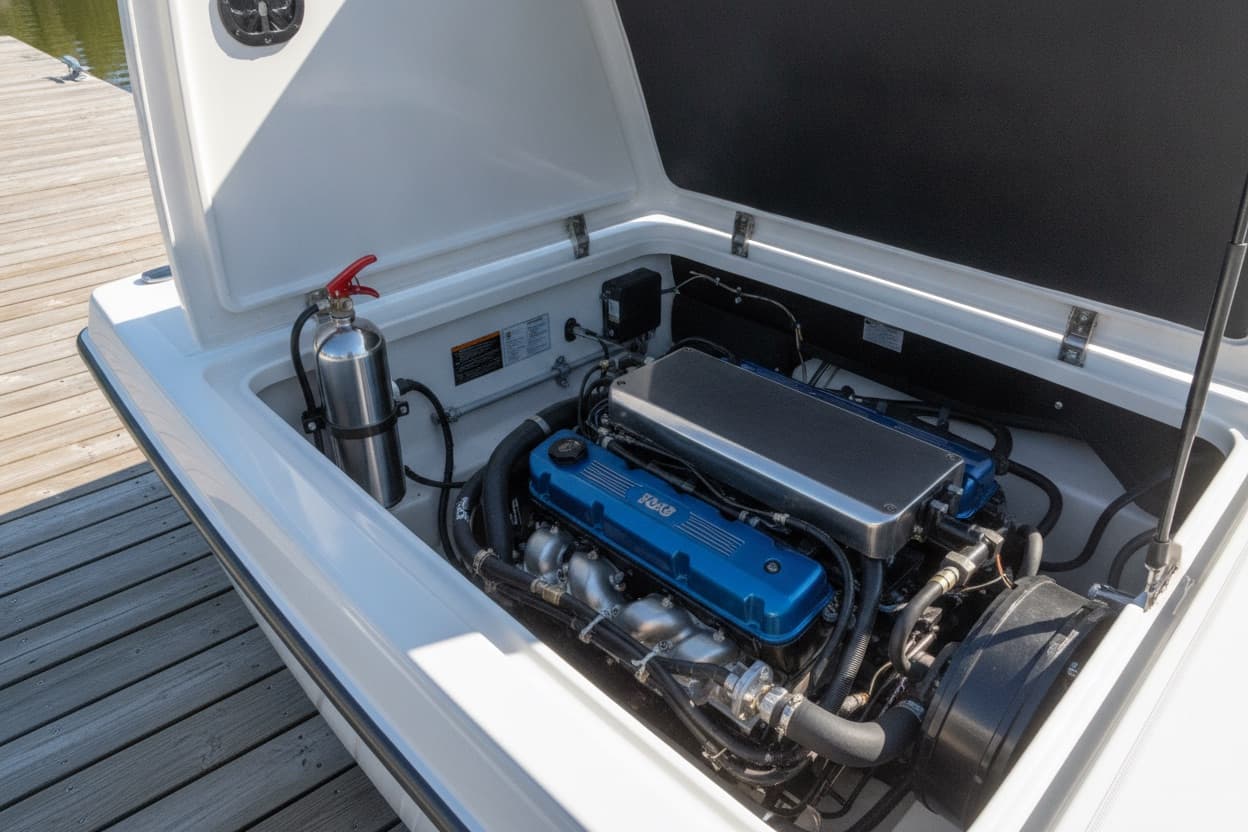
BW1 clause 1.11 removes cover for fire or explosion where the Maximum Designed Speed of the vessel exceeds 17 knots and it has inboard machinery, unless one of two things is true. Either the engine compartment has a fire extinguishing system that is automatically operated, or has controls at the steering position, or has controls next to the engine compartment. Or the boat carries portable firefighting equipment that allows access to the engine compartment through a designated access panel or peep hole. The same clause adds that all fire extinguishing equipment must be properly installed and maintained. Version BW1, June 2026.
The craft wording asks for more, and the difference matters because the two are often described as one requirement. Endorsement 7.3 excludes loss or damage by fire or explosion on a boat with inboard machinery unless it is fitted with a remote controlled system, meaning the controls are operated from the steering position, or an automatic fire extinguishing system in the engine compartment and if possible the tank space, and manually operated fire extinguishers and a fire blanket in the galley. Note the and. On this wording a system in the engine compartment on its own is not enough.
The same endorsement carries a turbojet limb at 7.2: no cover for loss or damage to turbojet speedboats unless they are taken out of the water in the normal way and not run ashore under their own power. If your boat is a jet drive and you beach it, that is the clause you are on.
Passing a boat safety examination is a different test with a different purpose, and it does not stand in for either of these conditions. The question a surveyor asks is not the question the clause asks.
Who is allowed to drive my powerboat?
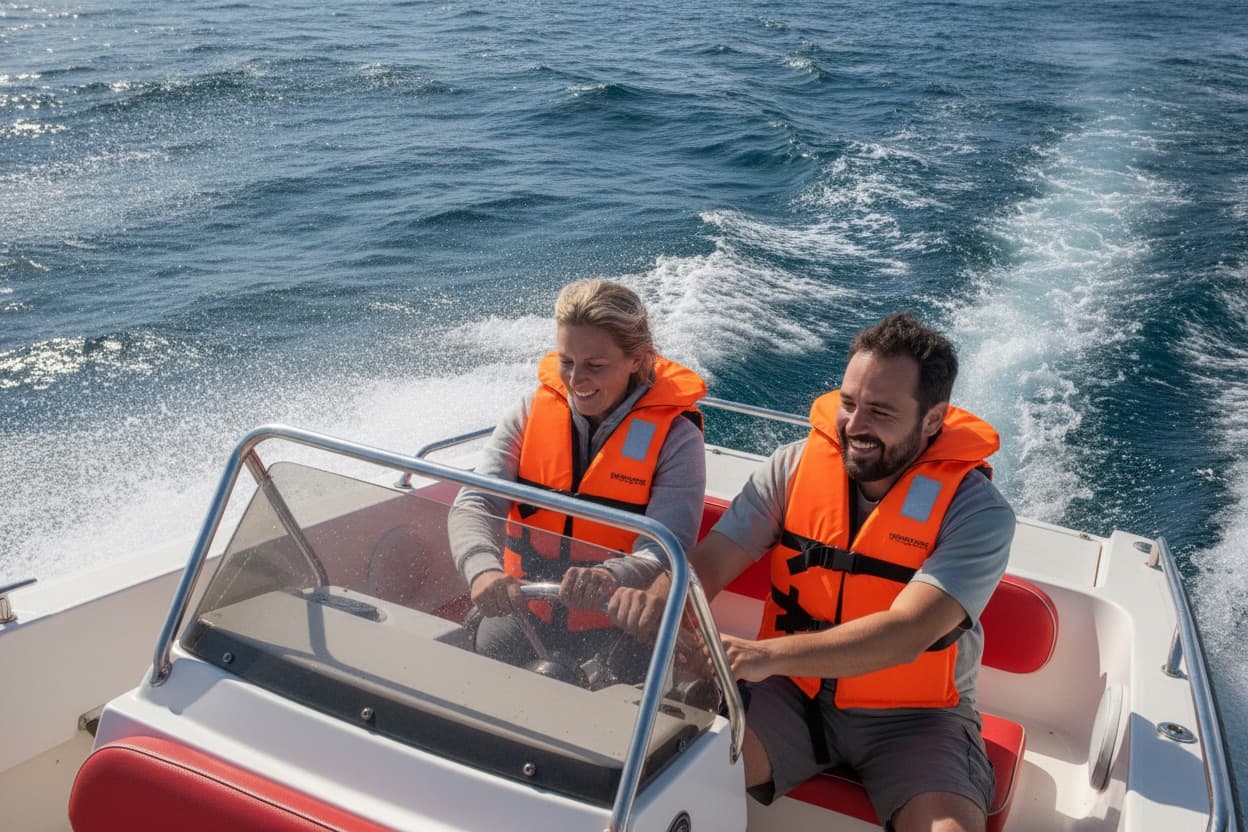
You do not need a licence to drive a powerboat for private recreational use at sea in the UK. What you do have is a duty under the policy: if you let someone else take the boat, you must take steps to satisfy yourself that they have the experience to do it.
Training is not a licence, and the difference is worth getting right because owners are sold one as the other.
The RYA describes its Powerboat Level 2 course as the basis of the International Certificate of Competence, and the certificate is endorsed for the type of boat the training was done in. It is a certificate of competence, not a permission to be on the water, and one UK insurer publishes discounts for boating experience and applicable qualifications, so it is rated even where it is not required.
Two statutory thresholds do bite, and both are set out in the GOV.UK guidance on boat licences: commercial use needs a boatmaster's licence, and carrying more than 12 passengers needs a passenger certificate from the Maritime and Coastguard Agency.
The duty the policy puts on you
BW1 General Condition 1.1 is one sentence and it is a condition of the whole policy rather than a claims detail: "If You give permission for someone else to be in charge of the Vessel, You must take steps to ensure that they have experience to do so." A rival scheme advertises that cover extends to any person using the boat with your permission, which is true and is not the same thing. The extension is about who is insured. This condition is about what you did before you handed over the keys.
General Condition 1.2 sits in the same block: the vessel must not be navigated single-handed by anyone for more than 24 consecutive hours. That is a real limit on a long solo passage and almost nobody publishes it.
The severity nobody states
On the craft wording, skipper charter and fare-paying passenger use are available by endorsement, and both are conditional on the necessary licences and certificates being in force. Endorsements 22 and 23 then say what happens if they are not, in the same words: "all cover under Your Policy will be inoperative." The whole policy, not the trip and not the claim. Endorsement 23 adds the same consequence if the number of fare-paying passengers exceeds the number on your schedule.
One rival's scheme advertises club support boat use and skippered or angling charter use as included. On the wordings behind this page those are non-standard use, excluded unless they are noted on the certificate. We are describing a difference between two markets, not passing judgement on either, and it is exactly the sort of thing to raise before you buy rather than after.
How experience is actually assessed at quote time, and what a new owner can do about it, is set out in our guide to boat insurance experience requirements.
What powerboat and speedboat insurance costs
We publish no premium of our own. No figure we hold describes a powerboat, so what follows is other insurers' published figures in pounds, each with a source and the date we read it. None of them is a quotation and none of them is a price for your boat.
That is a deliberate choice rather than a gap. A single average premium on a class this wide would be a number with no boat behind it, and the market's own published averages turn out to travel between class pages, which is the sort of thing you only see if you read more than one of them.
| Figure | What it is | Whose | Read |
|---|---|---|---|
| £429 a year | That insurer's own averaged customer figure for speedboat insurance, stated as accurate as of July 2026 across 715 policies. The same figure appears on more than one of their class pages, so read it as a general small-craft average rather than a speedboat price | GJW Direct | 27 Aug 2026 |
| £3,000,000 | Third-party liability included as standard on that insurer's powerboat policy | Insure4Boats | 27 Aug 2026 |
| up to 25% | No claims discount, after five claim-free years on one of them | Insure4Boats, Noble Marine, Visicover | 27 Aug 2026 |
| up to 15% | Discount for keeping the boat in a recognised marina | Insure4Boats | 27 Aug 2026 |
| 12.5%, capped at £150 | Multi-boat discount | Noble Marine | 27 Aug 2026 |
| about 50 knots | The speed above which those insurers will not write the boat at all | Insure4Boats, Craftinsure, GJW Direct | 27 Aug 2026 |
| about 80 knots | Above which that insurer states cover is not generally available on its speedboat policy | GJW Direct | 27 Aug 2026 |
An eligibility ceiling and a cover condition are not the same thing
This is the distinction the whole category gets wrong, and the last two rows of that table are why it matters. About 50 knots and about 80 knots are eligibility ceilings: the speed above which a given insurer declines to write the boat at all. 17 knots and 35 knots are cover conditions inside a wording, gating particular grants on a policy that has already been written. They point in opposite directions. Neither of the two wordings we hold contains a speed eligibility cap of any kind, and we checked both. So a page that tells you the wordings cap design speed has confused an underwriter's appetite with a policy term.
Three excess mechanics that change what a claim pays
BW1 Section 11 carries three that are easy to miss. A claim from striking a submerged object or grounding is subject to double the excess shown on your certificate, and buying the Excess Waiver reduces it to the standard excess. Claims for an outboard motor or a tender carry a £100 excess or the certificate excess, whichever is higher, and personal belongings claims carry the same £100 floor. And where a claimable item is aged five years or over, the insurer reduces the payment by 25% if repairing or replacing it would leave it better than it was before the loss. That last one covers protective covers and canopies, machinery, batteries, tenders, paintwork and upholstery, and it is not applied on a total or constructive total loss.
What actually moves the figure on this class:
- The value you want insured, and whether it is agreed or market value
- Length, and the manufacturer's stated maximum speed
- Whether the boat has inboard machinery, and how old that machinery is
- How the boat is used, and whether any non-standard use is declared
- Where it is kept, and whether that is a recognised marina, a compound or a driveway
- Your own experience and any qualifications you hold
- Claims history, and how many claim-free years you can evidence
On who is cheapest, we publish no ranking and we are not going to. We are an introducer rather than a comparison site, and on this class the cheapest quote and the right quote are separated by three questions: whether the boat is over or under 17 knots, whether racing or competitive use is declared, and whether it is inland or coastal. Answer those and the shortlist looks different.
General information, not financial advice. Figures published by other insurers are their figures, read on the date shown, and they change without notice.
Do you need insurance for a powerboat in the UK?
Inland, yes in practice: GOV.UK says you will usually need third-party insurance for at least £1 million if you have a powered boat or a houseboat. At sea, GOV.UK names no figure at all for a private pleasure craft, so the number that binds you there is contractual rather than statutory.
The inland figure and the penalty both come from the GOV.UK guidance on owning a boat, which also says you "could be prosecuted or fined if you do not have the right insurance" and that the kind of penalty depends on your navigation authority.
There is a second layer above that floor, and it is often reported as if it contradicted the first. The Canal & River Trust sets £2,000,000 of third-party cover as a condition of holding its licence. That is a licence condition rather than a different reading of the law, so both numbers are true at once: £1 million is the general inland floor and £2,000,000 is what that particular authority requires of its licence holders.
At sea the picture is simpler and less comfortable. No statutory figure applies to a private pleasure craft, so whether you need cover, and for how much, is set by whoever you deal with: the harbour authority, the marina, the club or the slipway. Their conditions are contractual, they vary, and a marina can and does ask for more than any statute would.
The comparison of what each kind of authority asks for is on our boat insurance hub, and the harbour and marina side is set out clause by clause on our RIB insurance page.
General information, not financial advice. Check the conditions of your own navigation authority, harbour or marina.
How the arrangement works
We introduce your enquiry. We do not quote it, we do not underwrite it, and we carry no risk. On this class the enquiry goes to Topsail Insurance Ltd, our principal, which is also the firm named in the documents you receive. This is a UK and European chain, so a US-resident enquiry is outside what it reaches. How the arrangement works sets out the route in full.
Any firm arranging insurance for you in the UK appears on the Financial Services Register, and it is worth checking the one named in your paperwork.
Reviewed by Costas Matheou, licensed insurance agent (Cyprus), ICCS certificate 6882. Content reviewed 27 August 2026.
Powerboat and speedboat insurance FAQ
Do you need a licence for a speedboat in the UK?+
Not for private recreational use at sea. The RYA describes its Powerboat Level 2 course as the basis of the International Certificate of Competence, and the certificate is endorsed for the type of boat you trained in, so it is a certificate of competence rather than a licence. Two thresholds are statutory: commercial use needs a boatmaster's licence, and carrying more than 12 passengers needs a passenger certificate from the Maritime and Coastguard Agency. The insurance question is separate and it points at you rather than at your crew. BW1 General Condition 1.1 says that if you give permission for someone else to be in charge of the vessel, you must take steps to ensure they have the experience to do so (Version BW1, June 2026).
What does boat insurance not cover on a fast powerboat?+
Racing and speed trials, fire on an unequipped inboard boat over 17 knots, outboard theft where the security was only a padlock and chain, and any use except your own private pleasure. By clause, for this class: where the Speedboat clause is on the schedule there is no cover for loss, damage, liability or salvage while the boat is racing or in speed tests or trials (craft Endorsement 7.1). On BW1 there is no racing cover at all for a vessel that is not a sailing vessel (Section 6 clause 2.1 and exclusion 1.4). Fire or explosion is excluded on an inboard boat above 17 knots unless the required extinguishing equipment is fitted (BW1 clause 1.11, craft Endorsement 7.3). Theft of an outboard is excluded where the only security was a padlock and chain (craft clause 1.4.3). And hire, charter or any use except your own private pleasure is excluded unless it is noted on the certificate.
What is the average cost of boat insurance in the UK?+
We publish no premium of our own, because no figure we hold describes a powerboat. One UK insurer publishes its own customer average for speedboat insurance at £429 a year, stated as accurate as of July 2026 across 715 policies. Two things to hold alongside it: those are their customers rather than the market, and the same figure appears on more than one of their class pages, so it reads as a general small-craft average rather than a speedboat price. It is not a quotation and it is not financial advice. On this class the value insured, the stated maximum speed, where the boat is kept and your claims history move the figure more than the class label does.
What is not covered by marine insurance?+
Marine insurance is a broad label and most of it is not this. Cargo, hull and machinery for commercial ships, and protection and indemnity for shipowners are separate markets with their own wordings and their own exclusions, and the questions people ask about them, such as the 72-hour clause, come from that side rather than from a private boat policy. Neither of the wordings behind this page contains a 72-hour clause, so we do not answer for it. What this page covers is a private powerboat or speedboat policy on a UK and European scheme, and its exclusions are set out clause by clause in the question above.
What is the best boat insurance for small boats in the UK?+
We publish no ranking, and the reason is structural rather than coy: we are an introducer, not a comparison site, so a league table from us would be marketing rather than information. What decides it on this class is three answers. Is the manufacturer's stated maximum speed over or under 17 knots, because that sets the class on one of the two wordings. Is any racing, speed testing or competitive use going to happen, because the wordings treat that very differently from each other. And is the boat inland or coastal, because the statutory position and the cruising limits both change at the shoreline. Send us those three and we will introduce the enquiry to the market that writes it.

Tell us about the powerboat
The make and model, the manufacturer's stated maximum speed, where it is kept and what you use it for are the four answers that decide the quote. Send those and we introduce the enquiry to the market that writes this class. You deal with the firm named in the documents you receive, and the conditions on this page are the ones worth asking them about.
- No obligation
- every underwriting question asked upfront
- a licensed Cyprus agent reviews every enquiry
Also on WhatsApp, Telegram and Viber