
What Protection and Indemnity (P&I) Insurance Covers That Hull Insurance Does Not
Protection and indemnity insurance covers the liability you owe other people for injury, damage and pollution arising from your vessel, while hull and machinery insurance covers damage to the vessel itself. Most owners only find the line between the two when somebody else sends the bill.
Written for a small commercial vessel and for a yacht with paid crew, not for a tanker.

300 GT
Lowest compulsory-certificate threshold
12
Passenger cap that keeps a coded boat below the passenger certificate
1969
The Act that does bind a UK marine employer
4
UK compulsory marine liability certificates
Insuring a working boat or a crewed yacht?
Tell us what the boat does, who works aboard and where it operates. We introduce the enquiry, and written terms from the firm arranging your cover follow, usually inside 24 hours.
Protection and indemnity, in one paragraph
Protection and indemnity, usually shortened to P&I, is the marine liability half of a vessel insurance programme. It answers claims other people bring against you from operating the boat: injury to crew and passengers, damage to other vessels and property, pollution, and removal of wreck. It does not repair your own boat.
Key takeaways
- Hull and machinery answers for damage to your vessel. Protection and indemnity answers for injury, damage and pollution you owe to somebody else.
- The Maritime and Coastguard Agency publishes four compulsory marine liability certificates, and the lowest threshold on any of them is 300 gross tonnage.
- A 38-foot coded workboat clears none of those four: under 300 GT, under 1,000 GT, no oil cargo, and held to 12 passengers by the Maritime and Coastguard Agency code that licenses it.
- What does bind a small United Kingdom operator is the Employers' Liability (Compulsory Insurance) Act 1969 and the berthing agreement it signed.
- The Nairobi wreck-removal duty has applied since 14 April 2015 to ships of 300 gross tonnage and above.
- In the European Union, Directive 2009/20/EC requires insurance for maritime claims on ships of 300 gross tonnage or more, which is the same 300 GT line from a second direction.
- A large yacht can exceed 300 GT. Its tonnage certificate settles that, not its length in metres.
What is the difference between hull insurance and protection and indemnity?
Hull and machinery insures the thing you own. Protection and indemnity insures what you owe. One pays to put your boat back together, the other answers the claim somebody else brings against you, and no amount of hull cover turns into liability cover when that claim arrives.
The distinction is not a technicality of wording. The two sides are rated differently, they respond to different events, and they can carry different limits and different deductibles on the same schedule.
| What happened | Hull and machinery | Protection and indemnity |
|---|---|---|
| You hole your own boat on a rock | Answers, subject to the deductible | Does not answer |
| You hole somebody else's boat | Does not answer | Answers the other owner's claim |
| A crew member is injured working aboard | Does not answer | Answers, and see the crew section below |
| Your fuel escapes into the harbour | Does not answer | Answers the clean-up you are liable for |
| A passenger is hurt on a trip you were paid for | Does not answer | Answers the passenger claim |
Read the right-hand column as the question this page is about. Every row in it is a claim from outside the boat, and that is the whole of the difference.
What does protection and indemnity insurance actually cover?
It covers your liabilities to other people arising from operating the vessel. In practice that means injury to crew, injury to passengers, damage to other vessels and to fixed property such as pontoons and lock gates, pollution and its clean-up, and the cost of removing your wreck when the authority requires it.
Wreck removal deserves a word, because it is the item that most often turns out to sit somewhere the owner did not expect. Internationally it is governed for larger ships by the Nairobi wreck-removal convention, in force since 14 April 2015, but for a boat below its threshold the question is decided entirely by your own wording and your berth agreement. On some wordings it sits inside the liability section, on others it is capped or withheld, and several berthing contracts name it separately from the third-party figure. We compare two scheme wordings and six United Kingdom berthing contracts on our page about third party only cover, which is where that question is answered properly rather than in a sentence here.
Is protection and indemnity insurance compulsory?
For most of the boats this page is written for, no, and there is no single worldwide answer: what is compulsory depends on the flag the vessel flies and the waters it works in. The compulsory regimes are built around thresholds, and small vessels sit below all of them.
The Maritime and Coastguard Agency publishes the four United Kingdom certificates and the point at which each one applies.
| Certificate | It applies to | A 38 ft coded workboat | A large yacht |
|---|---|---|---|
| Wreck removal | all vessels over 300 GT | No | Can exceed 300 GT |
| Bunker oil pollution | ships over 1,000 GT using oil as fuel | No | Usually not |
| Passenger liability | vessels licensed to carry more than 12 passengers | No | No |
| Tanker oil pollution | ships carrying over 2,000 tonnes of oil cargo | No | No |
| EU shipowner liability (Directive 2009/20/EC) | ships of 300 gross tonnage or more | No | Can exceed 300 GT |
Two obligations do reach it, and they are the ones worth planning around. The Employers' Liability (Compulsory Insurance) Act 1969 applies to almost every employer in Great Britain and is not a marine rule at all, which is exactly why it catches marine employers. And the berthing or harbour agreement is a private contract that can demand a liability figure, and often names salvage or removal of wreck as a separate item.
The same 300 GT line appears from a second direction inside the European Union, where Directive 2009/20/EC of 23 April 2009 requires shipowners to insure against maritime claims for ships of 300 gross tonnage or more. Two separate regimes, one threshold.
A note on that line for larger vessels. Gross tonnage measures enclosed volume, not length, so a large yacht can cross it where a small commercial boat never will. The Merchant Shipping Act 1995 sets the wreck-removal duty at a ship of 300 gross tonnage and above. Whether a particular yacht is over the line is answered by its tonnage certificate, never by its length in metres.
Does a hull policy cover liability to your own crew?
No. A hull and machinery policy insures the vessel. It does not insure your role as an employer, and that is the line protection and indemnity answers across. Once a boat has paid crew, its owner has employer liabilities that no amount of hull cover will answer.
Which regime applies to you then depends on where your crew are employed and under what flag, and each of those has its own page here rather than a paragraph in this one. In the United States an injured seaman sues their employer under the Jones Act, 46 U.S.C. 30104, while a maritime worker who does not meet the legal test for a seaman falls instead under the Longshore and Harbor Workers' Compensation Act, 33 U.S.C. 901. Which of the two applies to a given hire is not a do-it-yourself test.
Where each branch is answered
- The United States seaman and longshore distinction, set out in full, is on marine business insurance.
- The crew endorsement on a yacht that earns charter income, priced on the number of crew carried, is on charter yacht insurance.
- The Maritime Labour Convention 2006, which governs a flagged, crewed large yacht, is on superyacht insurance.
- The United Kingdom duty, which comes from the Employers' Liability (Compulsory Insurance) Act 1969 rather than from anything maritime, is on commercial boat insurance.
What does a small commercial vessel need, a dive boat, an angling charter or a workboat?
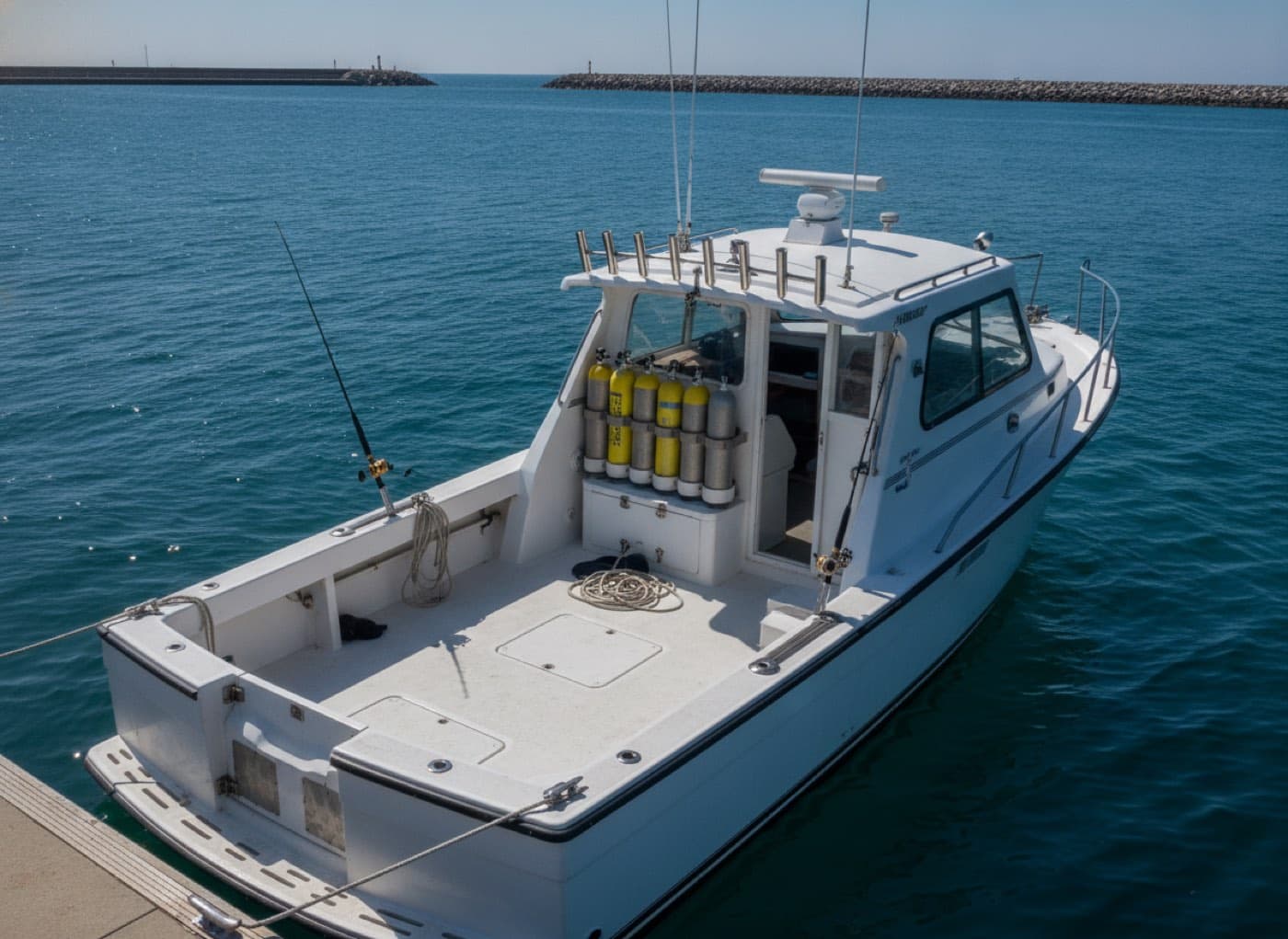
At this scale the exposures are concrete and local: a passenger stumbles on a wet deck coming back aboard after a dive, a crew member catches a hand in a line while making fast, you touch a moored boat coming alongside in a crosswind, a fuel line weeps into the harbour overnight.
A workboat carries a further wrinkle: it is certificated under the Workboat Code Edition 3, while an angling, dive or sightseeing boat carrying up to 12 passengers is certificated under the Maritime and Coastguard Agency's Sport or Pleasure Vessel Code. They are different documents with different scopes, and which one applies to you is worth establishing before you discuss cover.
None of those events is a hull claim, and none of them is exotic. They are the ordinary working risks of a boat that carries people and does a job, and they belong to the liability side of the schedule. The practical starting point is not the certificate table above, because that table showed you sit below all of it. It is the berthing agreement you have signed and the statutory employers liability that attaches the moment you take somebody on.
Our page on commercial boat insurance sets out what a small commercial vessel arrangement covers in the United Kingdom and European market and where its boundaries fall.
What does a yacht with paid crew need?
The same boundary, with more weight on the crew side. On a crewed yacht, liability to the people who work aboard is the exposure owners most often assume is somewhere inside the hull policy, and it is not.
Wages, repatriation, medical care and the shipowner's financial security obligations are set out in the Maritime Labour Convention 2006, an International Labour Organization instrument, and applied through the yacht's flag.
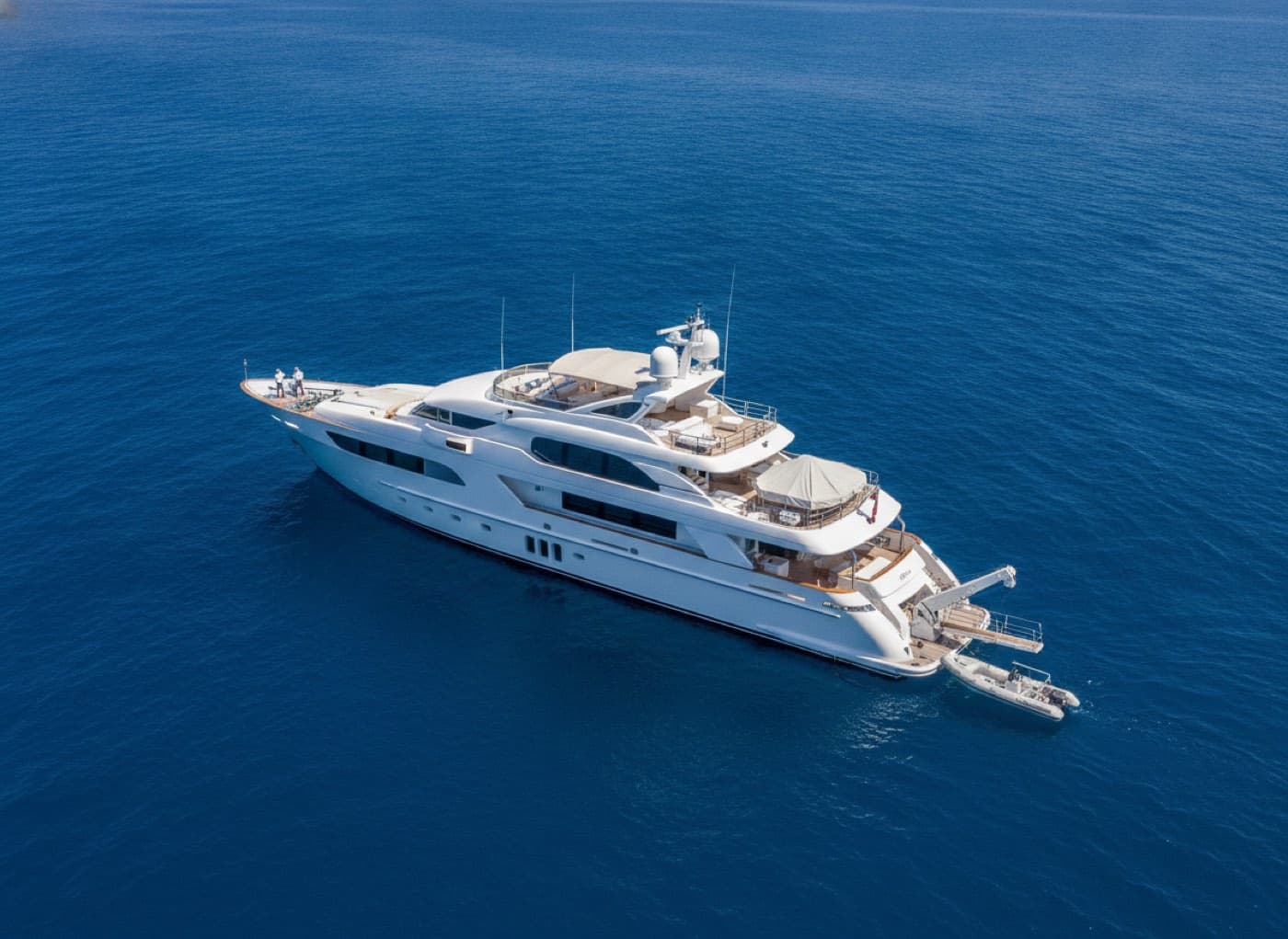
This is also the end of the market where the 300 GT line stops being theoretical. A large yacht can exceed it, which brings the wreck-removal duty into play where a small commercial vessel never meets it.
Our superyacht insurance page covers the crew layer, the war cover and the rest of a full programme.
Frequently asked questions
1.Is protection and indemnity the same as third-party liability?
+
They overlap and they are not identical. Third-party liability is the general description; protection and indemnity is the marine form of it, and it reaches heads of cover a general liability policy does not, such as crew injury, pollution and removal of wreck.
2.Does my boat policy already include protection and indemnity?
+
On most leisure and small commercial policies a liability section sits on the same schedule as the hull cover. What matters is the limit and what the section actually names, so read the schedule rather than assume it, and ask what the sub-limits are for pollution and removal of wreck.
3.Do I need protection and indemnity for a boat under 300 gross tonnage?
+
Nothing in the United Kingdom compulsory certificates requires it at that size. Your berthing agreement or harbour licence may still require a liability figure, and employers liability applies as soon as you employ anybody.
4.What is a supplementary call?
+
It is a request from a mutual insurer for further contributions from its members after the policy year, where claims across the group have exceeded what was collected. A fixed-premium policy does not work that way.
5.What is a P&I Club?
+
A club is a mutual insurer owned by its shipowner members rather than a company selling policies for profit. The largest belong to the International Group of P&I Clubs and are built around ocean-going tonnage. Membership can carry supplementary calls, which is the practical difference from a fixed-premium policy.
6.How much does protection and indemnity insurance cost?
+
It is rated individually against the vessel, its use, where it works and how many people are aboard, and it is not sold from a published tariff. We give no figure on this page for that reason: any number quoted without those details would be a guess rather than a price.
7.What is not covered by protection and indemnity insurance?
+
Damage to your own vessel is the main one, because that is the hull side. Beyond that, scope is set by the specific wording rather than by the label, and cover is generally lost where loss is caused deliberately or where the vessel is operated outside the terms of its certification. Read the schedule and ask for the sub-limits.
8.Who pays to remove my wreck?
+
It depends on the wording and on what your berth requires. Some wordings put removal of wreck inside the liability section, others cap it, and several berthing contracts name it separately from the third-party figure.
Sources
- Maritime and Coastguard Agency, Certificate of proof of civil, passenger, other liability insurance (gov.uk), read 30 August 2026.
- Merchant Shipping Act 1995, Schedule 11ZA (Wrecks Convention), Article 12(1) (legislation.gov.uk), read 30 August 2026.
- International Maritime Organization, Nairobi International Convention on the Removal of Wrecks, in force 14 April 2015, read 30 August 2026.
- Directive 2009/20/EC of the European Parliament and of the Council of 23 April 2009 on the insurance of shipowners for maritime claims (EUR-Lex), read 30 August 2026.
- Employers' Liability (Compulsory Insurance) Act 1969 (legislation.gov.uk), read 30 August 2026.
- International Labour Organization, Maritime Labour Convention 2006, read 30 August 2026.
How we work
World Yacht Insurance is an insurance introducer. We are not an insurer, we carry no risk, and we do not decide who covers you. Each enquiry goes to the partner whose market fits the vessel and the water it works in, and the firm that arranges your cover is named in the documents you receive.
The full picture is on how it works.
Reviewed by Costas Matheou, licensed insurance agent.
Coverage terms, premiums and deductibles on this page are indicative and not financial advice. Cover is subject to underwriting, survey and the policy wording.

Tell us what the boat does and who works aboard
The liability side is rated on the vessel, its use and the people on board, so those are the details that turn a general answer into a real one. Send them and we will point the enquiry at the market that fits.
- No obligation
- every underwriting question asked upfront
- a licensed Cyprus agent reviews every enquiry
Also on WhatsApp, Telegram and Viber