
Sailboat Insurance: Worldwide Cover for Monohull Sail Yachts
World Yacht Insurance arranges sailboat insurance through London Marine Insurance Services Ltd, a Lloyd's-accredited broker (FCA 308599), covering monohull sail yachts worldwide, including the Caribbean, for agreed-value hull (mast, rigging and sails included) plus liability up to $5M. Premiums typically run 1 to 1.5% of agreed value a year. Trimarans and ferro-cement hulls aren't eligible.
One sail-specific policy for cruisers, liveaboards, charter owners and racers, quoted from the Lloyd's market in about 24 hours.
Lloyd's
Placed via a Lloyd's-accredited broker
$5M
Hull & liability authority
Worldwide
Including the Caribbean
24h
Typical quote turnaround
Check this before you fill in the form
We can place
Monohull sail yachts anywhere in the world, including the Caribbean. Agreed-value hull with mast, rigging and sails, plus liability up to $5M.
We cannot place
Trimarans, ferro-cement hulls and cigarette boats. These are declined at any age and any value, so save yourself the form.
Worth knowing first
Figures on this page start at a $50,000 agreed value, and named-windstorm cover inside the hurricane box needs a signed hurricane plan with a 10% deductible.
What Is Sailboat Insurance?
Sailboat insurance is a specialist policy for monohull sail yachts. It covers your boat on an agreed-value basis, and it treats the mast, spars, standing and running rigging, and sails as part of the insured hull, not as loose extras. On top of that hull cover sits protection and indemnity (P&I) liability, which responds if your boat damages another vessel or injures someone. That is the shape of it: agreed-value hull and machinery, plus third-party liability.
This is not a generic runabout boat policy. A larger cruising sail yacht is typically underwritten as a yacht-grade risk, so a single-line powerboat policy often doesn't fit it cleanly. We insure sail and power monohulls and catamarans, and we say plainly what we don't take. World Yacht Insurance, through LMIS, does not currently insure trimarans, ferro-cement hulls, or cigarette boats. If you own one of those, this isn't the right product, and we would rather tell you now than after you fill in a form.
Catamaran owners have their own page: catamaran insurance.
World Yacht Insurance is a yacht-insurance introducer arranging hull and liability cover up to $5M for sail and motor yachts worldwide, including the Caribbean, placed in the London market through London Marine Insurance Services Ltd, a Lloyd's-accredited broker.
How Much Does Sailboat Insurance Cost?
Sailboat insurance from World Yacht Insurance typically runs 1 to 1.5% of agreed value per year, placed through London Marine Insurance Services Ltd, a Lloyd's-accredited broker. So a $150,000 cruising sailboat runs roughly $1,500 to $2,250 a year, and a $500,000 sail yacht runs roughly $5,000 to $7,500.
| Agreed value | About 1% / year | About 1.5% / year |
|---|---|---|
| $50,000 | $500 | $750 |
| $150,000 | $1,500 | $2,250 |
| $300,000 | $3,000 | $4,500 |
| $500,000+ | $5,000+ | $7,500+ |
What moves your premium
- Where you cruise, and your hurricane exposure
- The boat's length, agreed value and age
- Your sailing resume, boating experience and claims history
- Whether you race or charter the boat (private cruising prices lower)
Our in-house underwriting authority covers agreed values up to $5M, with access to the wider Lloyd's market above that. For context, market rates for sailboat cover run anywhere from about 1 to 5% of value depending on region and provider; our indicative band is 1 to 1.5%. Hurricane-prone coasts sit at the top of the range, which is why we ask where you keep the boat before we quote.
Not financial advice. Premiums depend on underwriting, and the figures above are indicative examples, not a quote or an offer of cover.
Estimate the Premium on Your Sailboat
The calculator is preset to a monohull sailboat. Set the agreed value, the year and the cruising area, and it returns the 1 to 1.5% band with the policy conditions that attach to your answers. It gives an indication, not a quote.
What's Covered and What Isn't
The terms below come straight from the LMIS policy wording we hold, not from marketing copy. That is the difference: we can show you the coverage boundaries before you apply.
Covered
- Agreed-value hull and machinery, including the mast, rigging and sails
- P&I (third-party) liability up to $5M
- Medical payments
- Wreck removal
- Fuel-spill and pollution liability
- Salvage
- On-water towing and emergency assistance
- Personal effects and onboard equipment
- Named-windstorm cover with a signed hurricane plan (10% deductible)
Not covered
- Trimarans, ferro-cement hulls, cigarette boats
- Normal wear and tear, and gradual deterioration
- Unseaworthiness
- Cruising outside your declared navigation area without an extension
- Named-windstorm damage without a signed hurricane plan on file
- Racing without a racing endorsement, and mast, spars, sails and rigging damage while racing (excluded even with the endorsement)
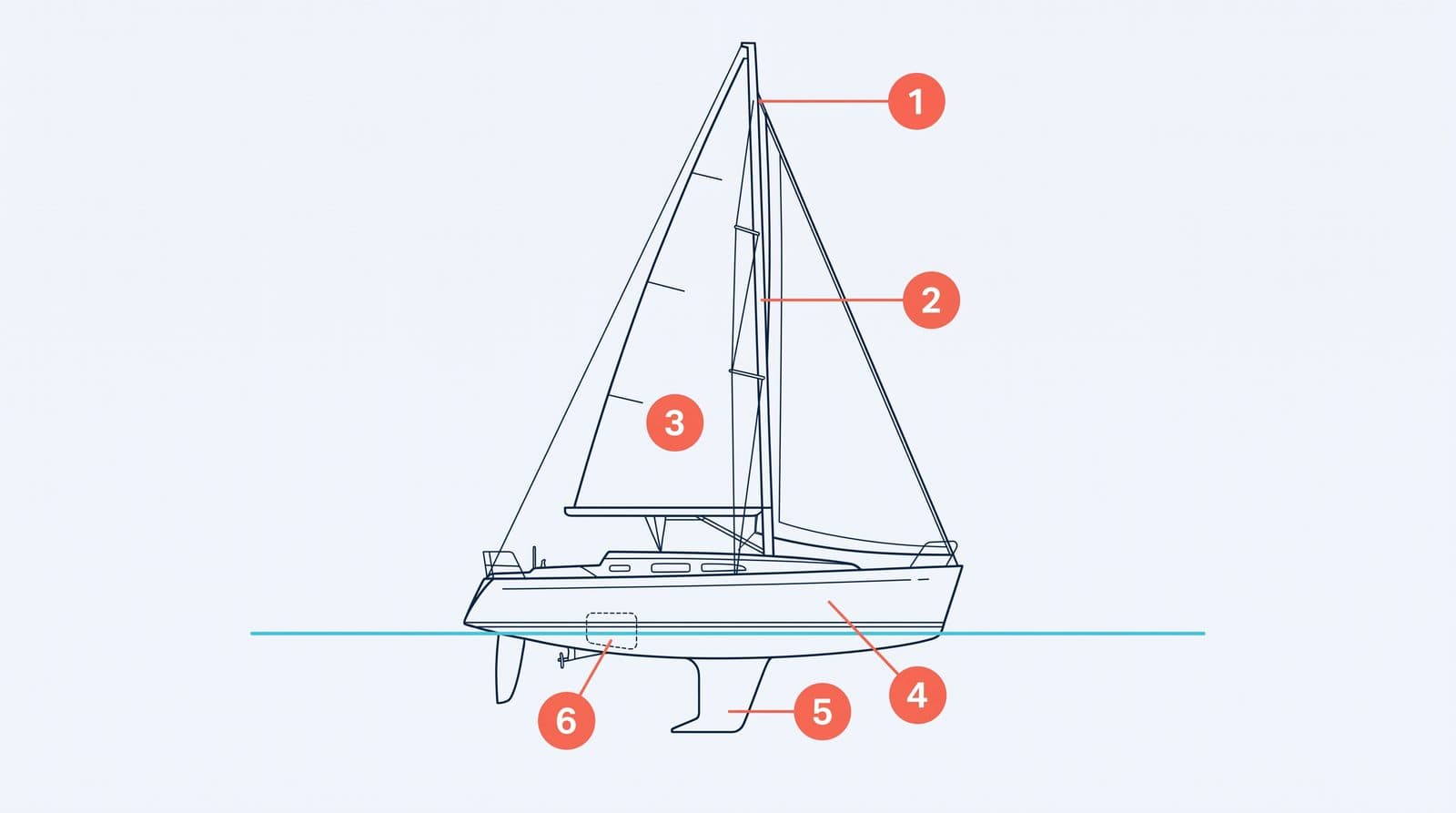
- 1Mast and spars
- 2Standing rigging
- 3Sails
- 4Hull below the waterline
- 5Keel
- 6Inboard engine and running gear
Agreed value is the setting that matters most here. You and the underwriter fix the insured figure up front, so a total loss pays that agreed number rather than a depreciated actual cash value (ACV) argued after the fact. For a sail yacht with an ageing rig and a locker of sails, that difference is real money at claim time.
Two conditions to know before you apply. Older or pre-owned sailboats usually need a current marine survey, and underwriters may ask for recent photos. Neither is a hurdle for a well-kept boat; both simply confirm the agreed value is fair.
We don't hide the exclusions. Reading them now saves an awkward conversation later. Every line in this table comes from the LMIS policy wording.
Mast, Rigging and Sail Cover, and Racing
On a sail yacht the rig is the highest-value and highest-exposure system aboard. The mast, spars, standing rigging (your shrouds and stays), running rigging, and sails are all part of the insured hull under agreed-value cover. So a dismasting or a rig failure from a covered event is a claim, subject to your deductible, not an argument about which parts were extras.
Here is where agreed value earns its keep. An agreed-value policy pays the figure you set up front, rather than a depreciated sail value worked out at claim time. A three-year-old sail that would fetch little on the used market is still insured as part of the boat you agreed to cover. State the value honestly at quote stage and the rig is protected for what it is worth to you.
Racing needs its own endorsement. Under the LMIS racing endorsement, cover extends to sailboat racing (provided there is no International Yacht Racing Union jury), but it excludes damage to the mast, spars, sails, and running and standing rigging while racing, and the hull deductible still applies. In short, the rig is covered when you cruise, not when you race, so tell us if you race and we will put the endorsement in place.
Solo and short-handed passages can be arranged too; see single-handed sailing insurance.
Worldwide Cruising Limits and the Hurricane Box
Your policy covers a declared navigation area. Worldwide cover, including the Caribbean, is what we arrange, but sail outside your declared area without an extension and a claim can fall through. So declare where you actually go, and extend the area before a longer passage.
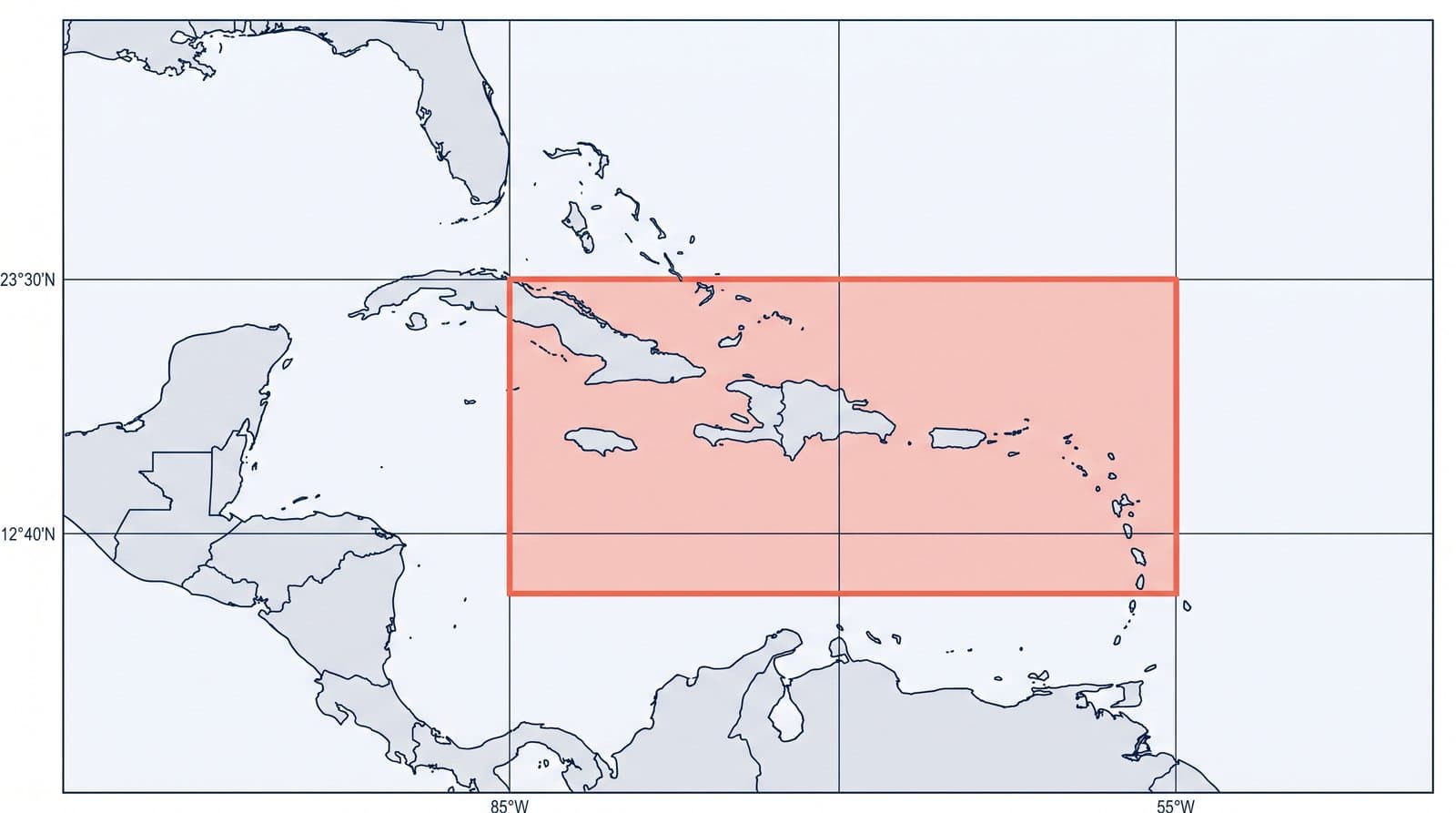
The region that changes the terms is the hurricane box, broadly the named-storm risk area south of Florida and the Bahamas and through the Caribbean. The NOAA Atlantic hurricane season runs June 1 to November 30. Some pages round that end date down; it is November 30 per the National Hurricane Center, and it is your Confirmation of Cover that sets your navigational limits and any geographical windstorm exclusion. Keeping or cruising your sailboat inside the box during the season is what triggers the signed hurricane plan requirement and the 10% named-windstorm deductible.
| Area | Season dates | What it means for cover |
|---|---|---|
| Caribbean / hurricane box | June 1 to November 30 | Signed hurricane plan required; 10% named-windstorm deductible |
| Croatia (Adriatic) | Year-round | Doubled deductibles under LMIS terms |
| Mediterranean (general) | Year-round | Standard terms; extension needed for longer passages |
| Outside declared area | Any | No cover without a cruising-area extension |
A few grounds carry terms we state plainly: in Cuban, Colombian, Venezuelan and Haitian waters every deductible doubles, and confiscation, piracy and theft are excluded. Theft is only coverable if the boat is moored in a commercial marina agreed in writing beforehand. If a passage plan touches them, raise it before you go rather than after.
Hurricane season dates: NOAA National Hurricane Center
Sailboat Insurance for Older Boats: Age, Survey and Rigging
Age alone does not make a sailboat uninsurable. Underwriters read the survey, not the year on the hull plate. Boats over about 20 years old need an in-force marine survey before cover attaches, and every recommendation in that survey has to be carried out. Trimarans, ferro-cement hulls and cigarette boats stay excluded at any age.
| Trigger | What underwriters require | What it means for you |
|---|---|---|
| Boat under about 20 years old | No automatic survey trigger. Underwriters can still ask for one on a pre-owned boat or a high agreed value. | A recent survey already on file usually shortens the quote turnaround. |
| Boat about 20 years old or more | An in-force marine survey before cover attaches. | No survey, no attachment. Book the haul-out before you apply, not after. |
| Once a survey exists | The policy warrants that the survey is in force and that all of the surveyor's recommendations have been complied with. | An open recommendation is a breach of warranty. That is a claims problem, not a paperwork problem. |
| Every policy carrying the photograph requirement | A photograph of the insured vessel with underwriters within 14 days of the attachment date. | Easy to forget. Take the photos on the day cover starts. |
| Standing rigging | Underwriters may set a condition on the age of the rig. | Declare a recent re-rig with its date. It answers the question before the underwriter asks it. |
Both clauses above come from the LMIS policy wording we place through, not from a general summary of the market. That is also why we say about 20 years rather than a hard cut-off: age is what triggers the request, and the survey is what decides the terms. A well-kept 40-year-old cruiser with a clean survey and a recent re-rig is an easier risk than a neglected boat half its age.
Source: survey and photograph requirements quoted from the London Marine Insurance Services yacht clauses and endorsements we place through.
Sailboat Insurance for Cruisers, Liveaboards and Charter
How you use the boat shapes the cover more than its length does. Three owner types come up most, and older boats get their own section above.
Cruisers and bluewater sailors
If you are heading offshore or planning a transatlantic run such as the ARC, declare it and extend the navigation area to match the route. A Pacific or Atlantic crossing is a different risk from coastal hopping, and it should be written in before you leave.
Liveaboards
We can cover a sailboat you live aboard, where some standard pleasure-use forms exclude it outright. If the boat is your home, tell us at quote stage so the cover matches how you actually use it.
Charter owners
Standard pleasure-use cover excludes charter activity, so a sailboat that earns its keep needs a bareboat or crewed charter endorsement. You can add loss-of-charter-hire cover, which under the LMIS wording pays up to €600 per day, for a maximum of 67 days, while the boat is under repair from a covered loss. It is an add-on, not part of the baseline premium, so ask for it when you request your quote.
How to Get a Sailboat Insurance Quote
Here is what happens after you reach out. Most sailboat quotes come back within 24 hours.
Most US states do not require sailboat insurance by law. Marinas, lenders, sailing clubs, regattas and charter programs almost always require proof of liability cover, so in practice most owners carry it anyway.
World Yacht Insurance is an introducer, not the underwriter, and it is not FCA-regulated. We don't carry the risk or write the policy. Cover is arranged and placed in the London market by London Marine Insurance Services Ltd, a Lloyd's-accredited broker; FCA firm reference 308599 belongs to LMIS. Read the full chain on how it works.
- 1
Tell us about the boat
Fill in the pre-qualifying quote form: year, make and model, length, agreed value, hull material, where you cruise, and how you use the boat.
- 2
Send a survey and photos if the boat is older or pre-owned
A current marine survey and a few recent photos let underwriters confirm the value.
- 3
We introduce your details to the LMIS producer desk
London Marine Insurance Services Ltd arranges and places the cover in the London market.
- 4
LMIS quotes back, usually within 24 hours
You review the terms and decide.
Sailboat Insurance FAQ
Does sailboat insurance cover the mast, rigging and sails?+
Yes. On an agreed-value policy the mast, spars, standing and running rigging, and sails are insured as part of the hull, so a dismasting from a covered event is a claim subject to your deductible. Racing is treated separately: it can need an endorsement and different rig terms, so declare it and confirm the wording first.
Can I insure an older sailboat?+
Usually yes. Age alone rarely stops a well-kept monohull. Expect a marine survey and current photos, and possibly a condition on the age of the standing rigging. Trimarans, ferro-cement hulls and cigarette boats stay excluded regardless of age.
Do I need insurance for a sailboat?+
Most US states do not require it by law. In practice, marinas, lenders, sailing clubs, regattas and charter programs almost always require proof of liability cover, and hull cover protects you from a large out-of-pocket loss if the boat is damaged or sunk.
Does sailboat insurance cover racing?+
Racing needs a racing endorsement. Under the LMIS wording, cover extends to sailboat racing when there is no International Yacht Racing Union jury, but it excludes damage to the mast, spars, sails and rigging while racing, and the hull deductible applies. Your rig is covered while cruising, not while racing, so declare racing use and add the endorsement before you compete.
Are trimarans and other multihulls covered?+
Monohull sailboats and catamarans are eligible worldwide, with cover up to $5M. Trimarans, ferro-cement hulls and cigarette boats are not currently eligible under our program. Catamaran owners should use the catamaran insurance page.
How much does sailboat insurance cost?+
Sailboat cover runs 1% to 1.5% of the agreed value a year, so about $3,000 to $4,500 on a $300,000 cruising yacht. On a sail yacht the mast, standing rigging and sails are insured as part of the agreed-value hull rather than as a separate item, which is the main reason sailboat cover is priced differently from a powerboat policy of the same value. Standing rigging older than about ten years is a common decline gate for offshore sailing, and racing carries an endorsement that excludes mast, rigging and sails while racing.
Reviewed by Costas Matheou, licensed insurance agent.
Last reviewed
Coverage terms, premiums and deductibles on this page are indicative and not financial advice. Cover is subject to underwriting, survey and the policy wording.
Get your sailboat covered
Tell us about your boat today and get a Lloyd's-market quote back within 24 hours.
- No obligation
- every underwriting question asked upfront
- a licensed Cyprus agent reviews every enquiry
Also on WhatsApp, Telegram and Viber